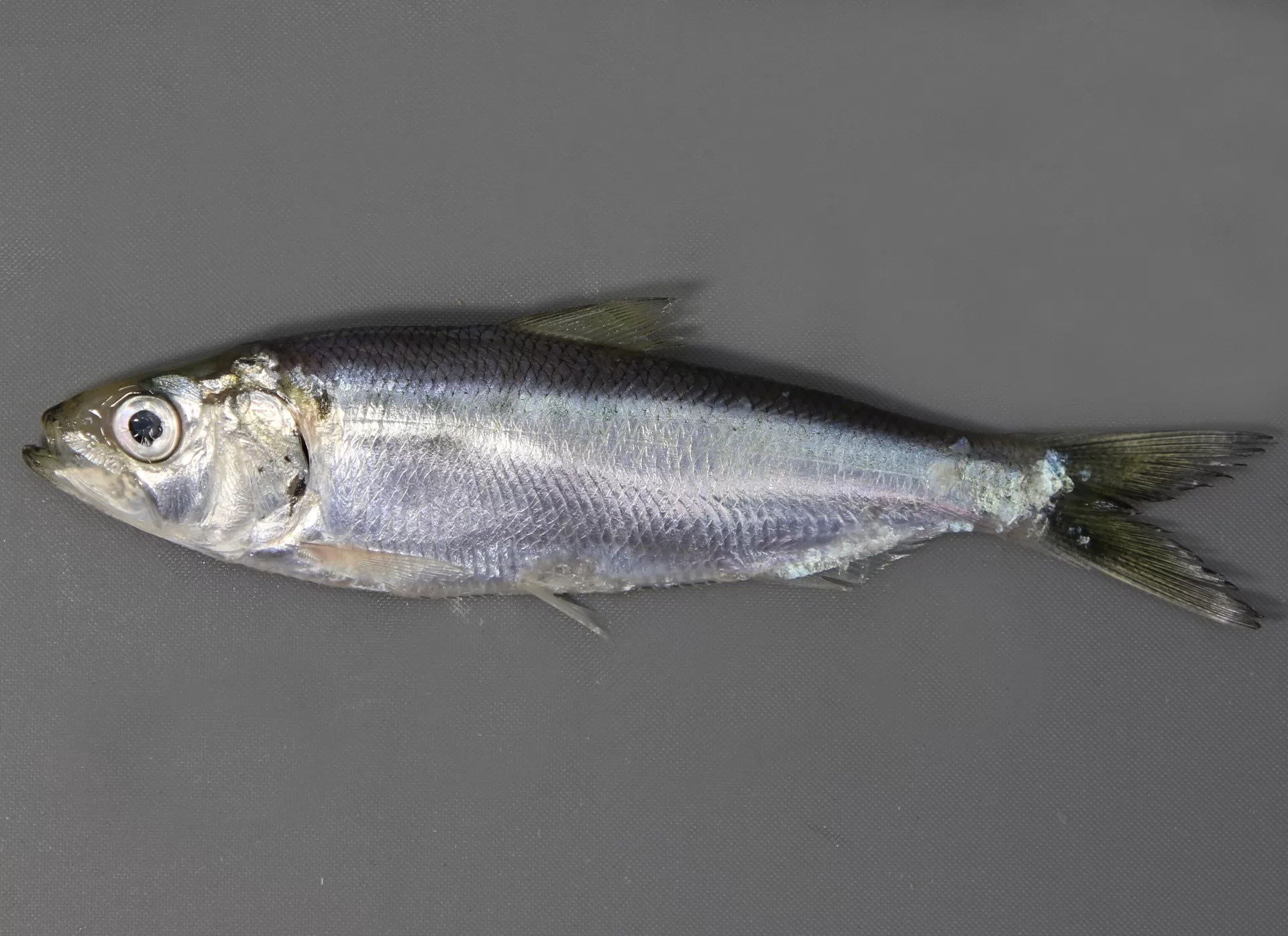
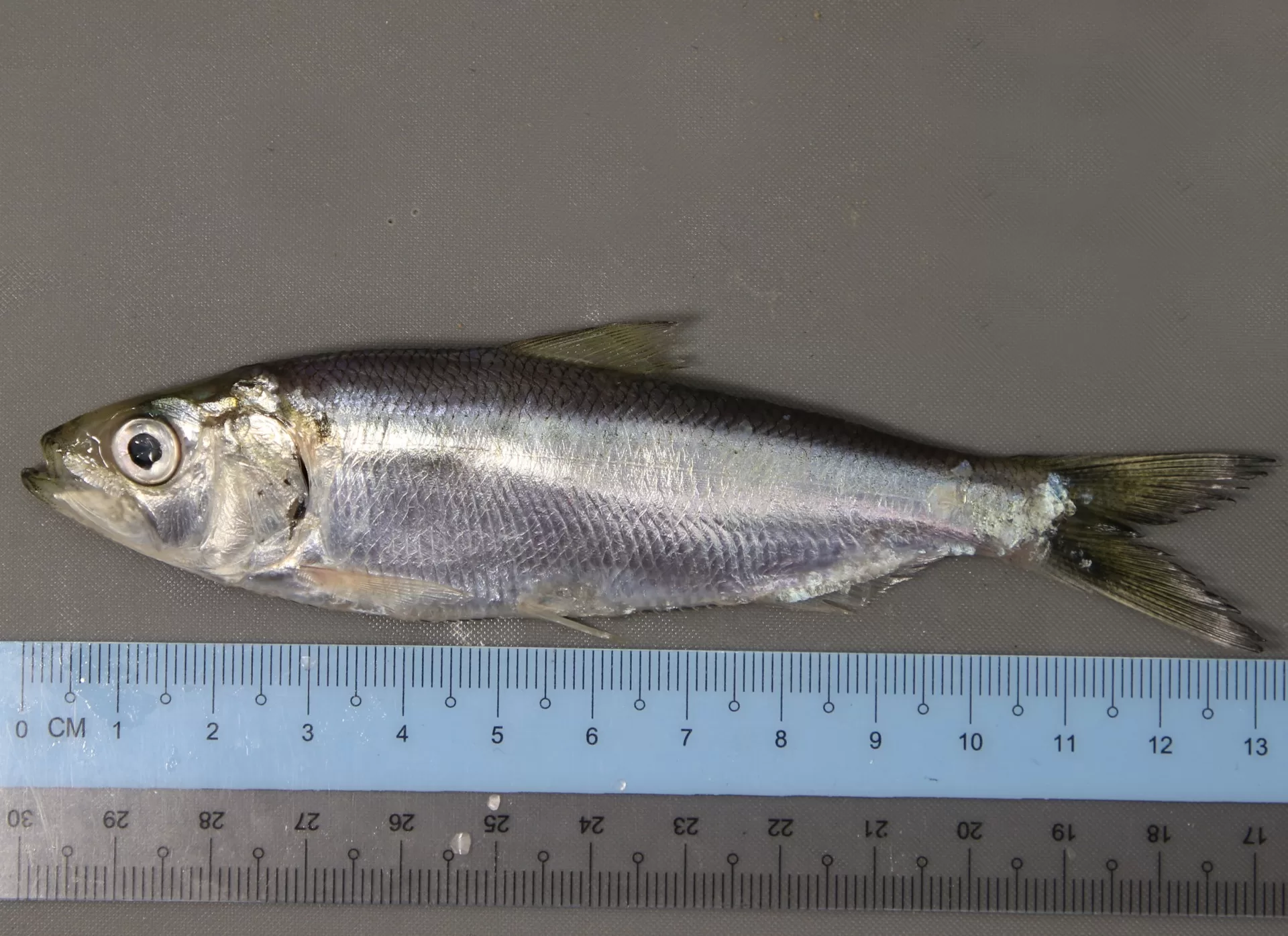
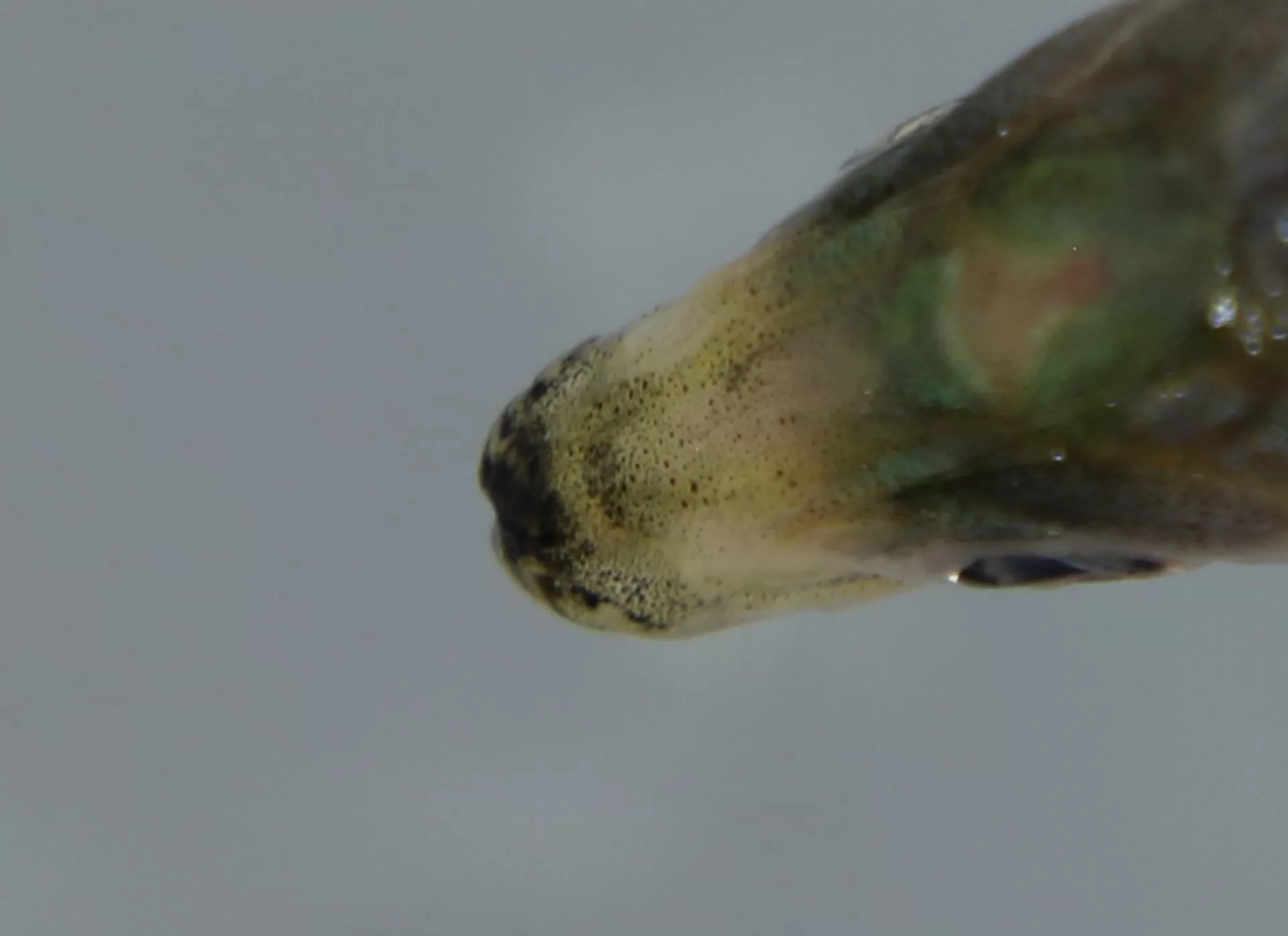
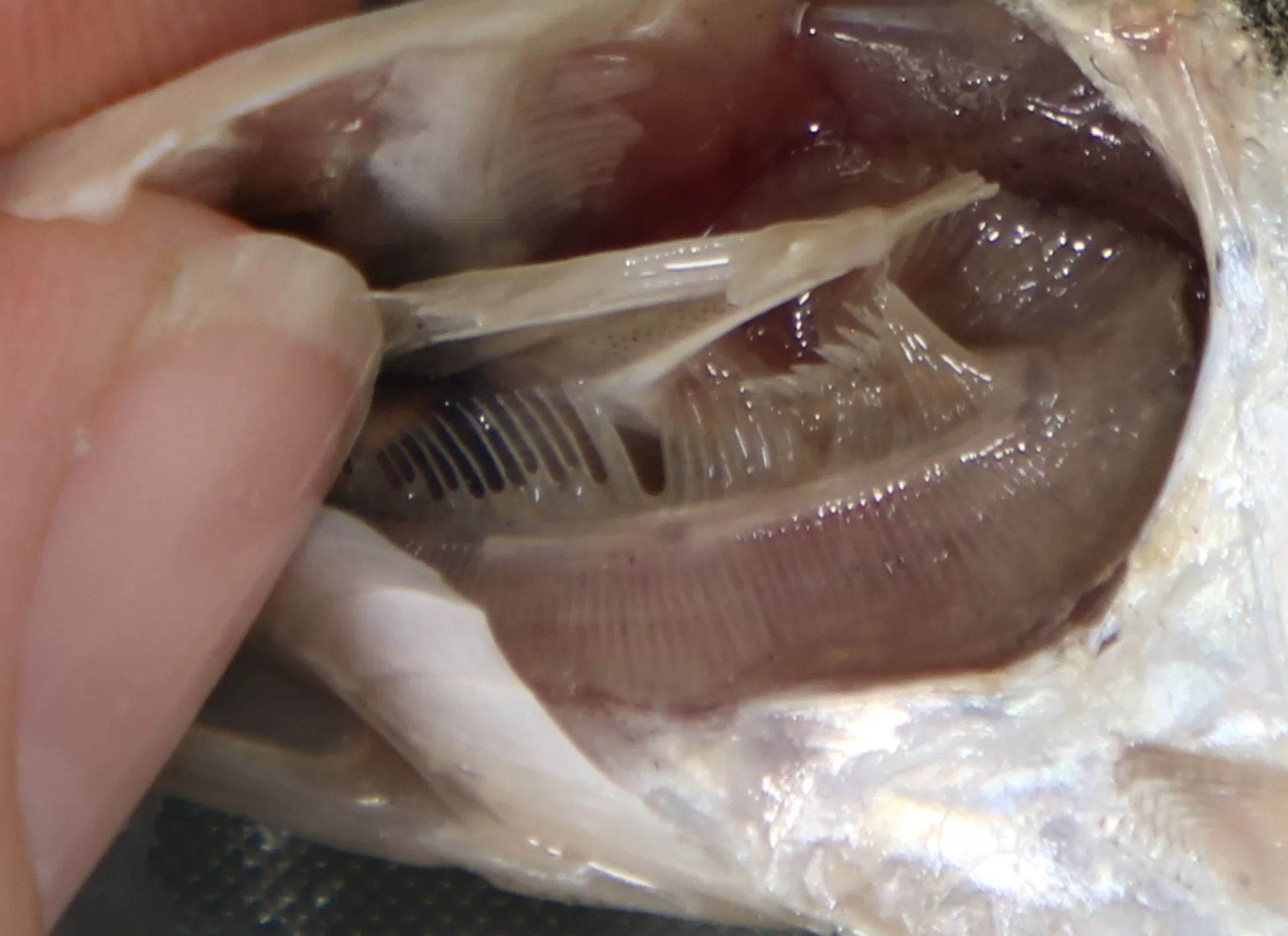
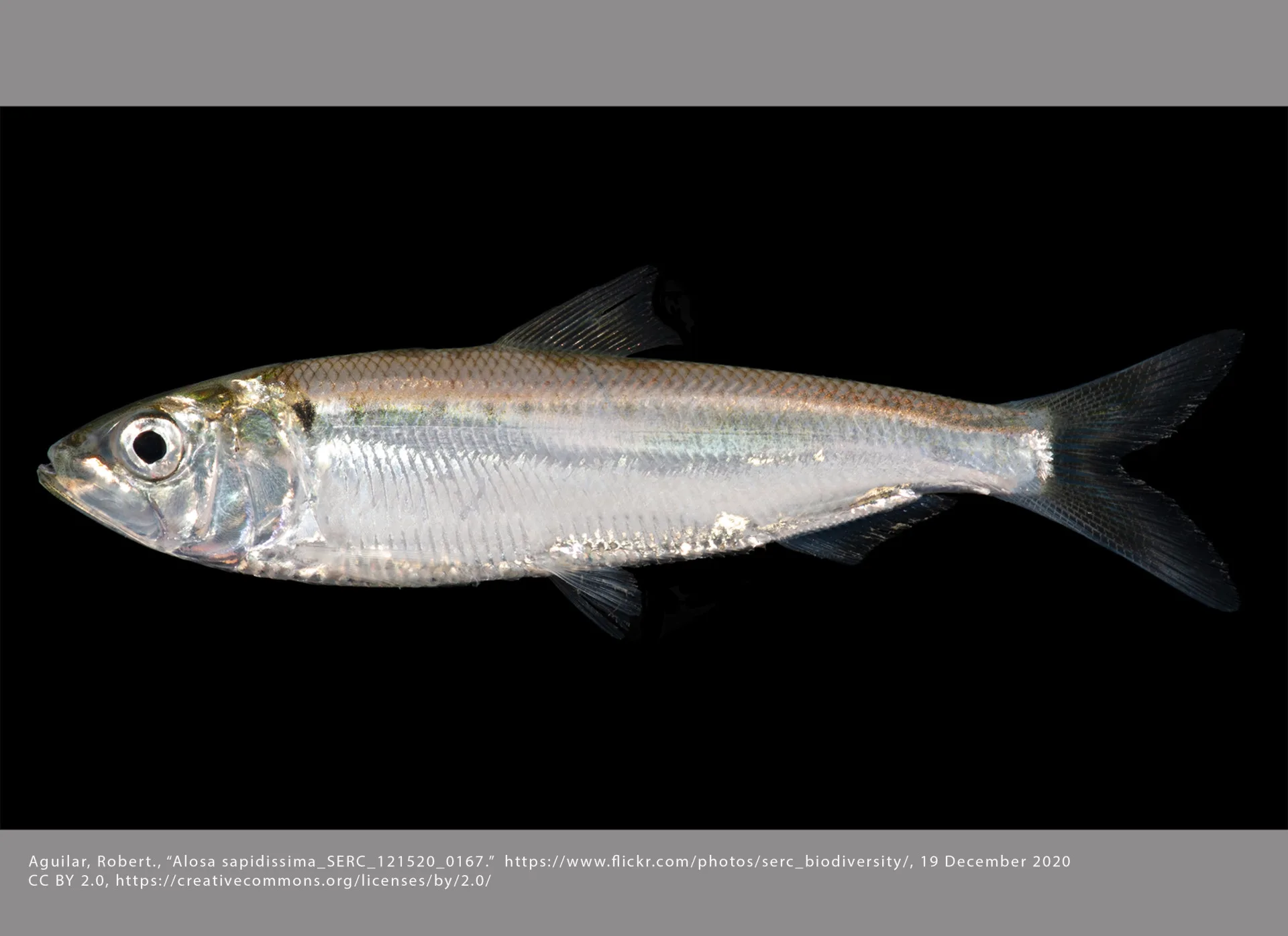
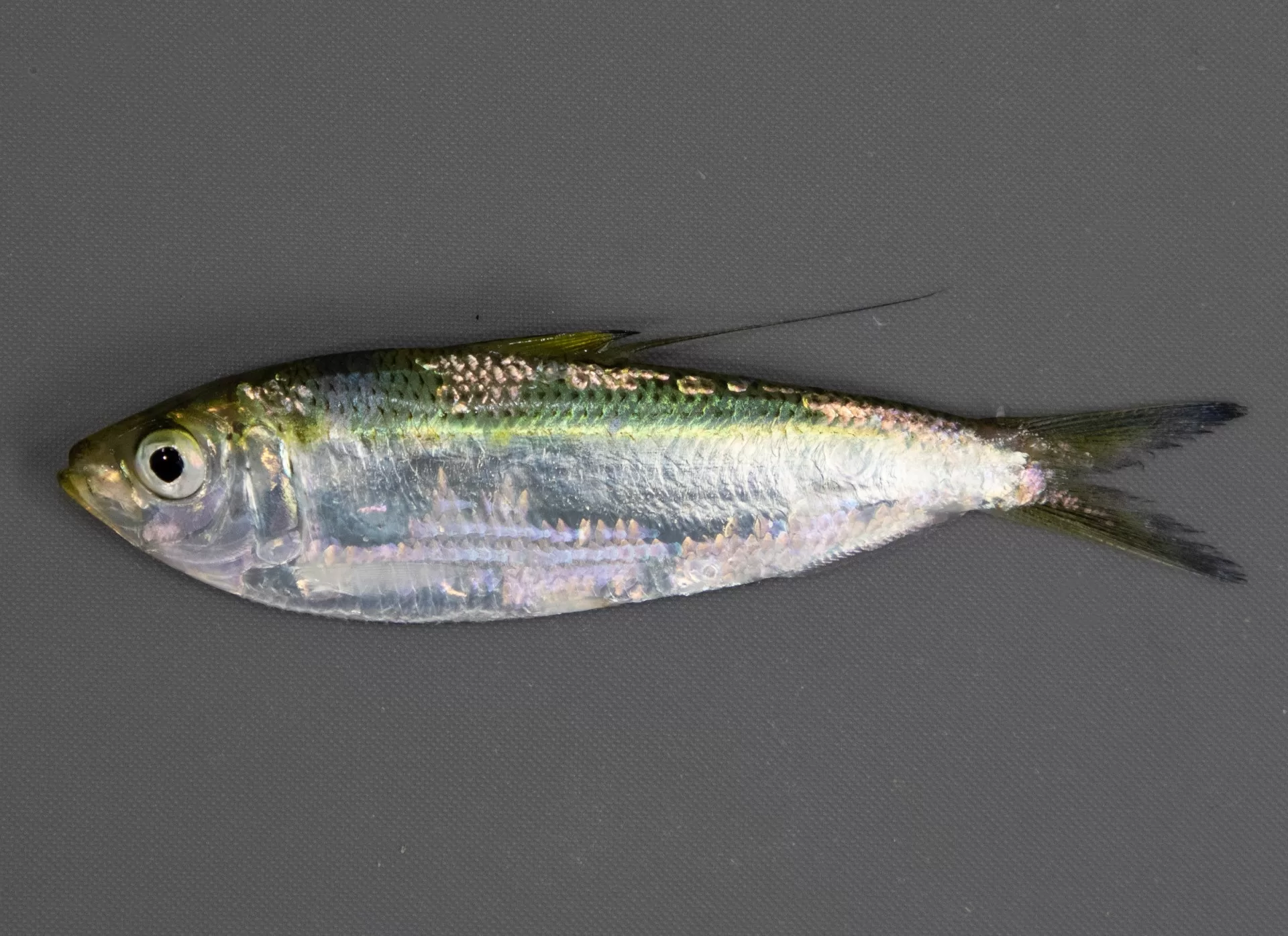
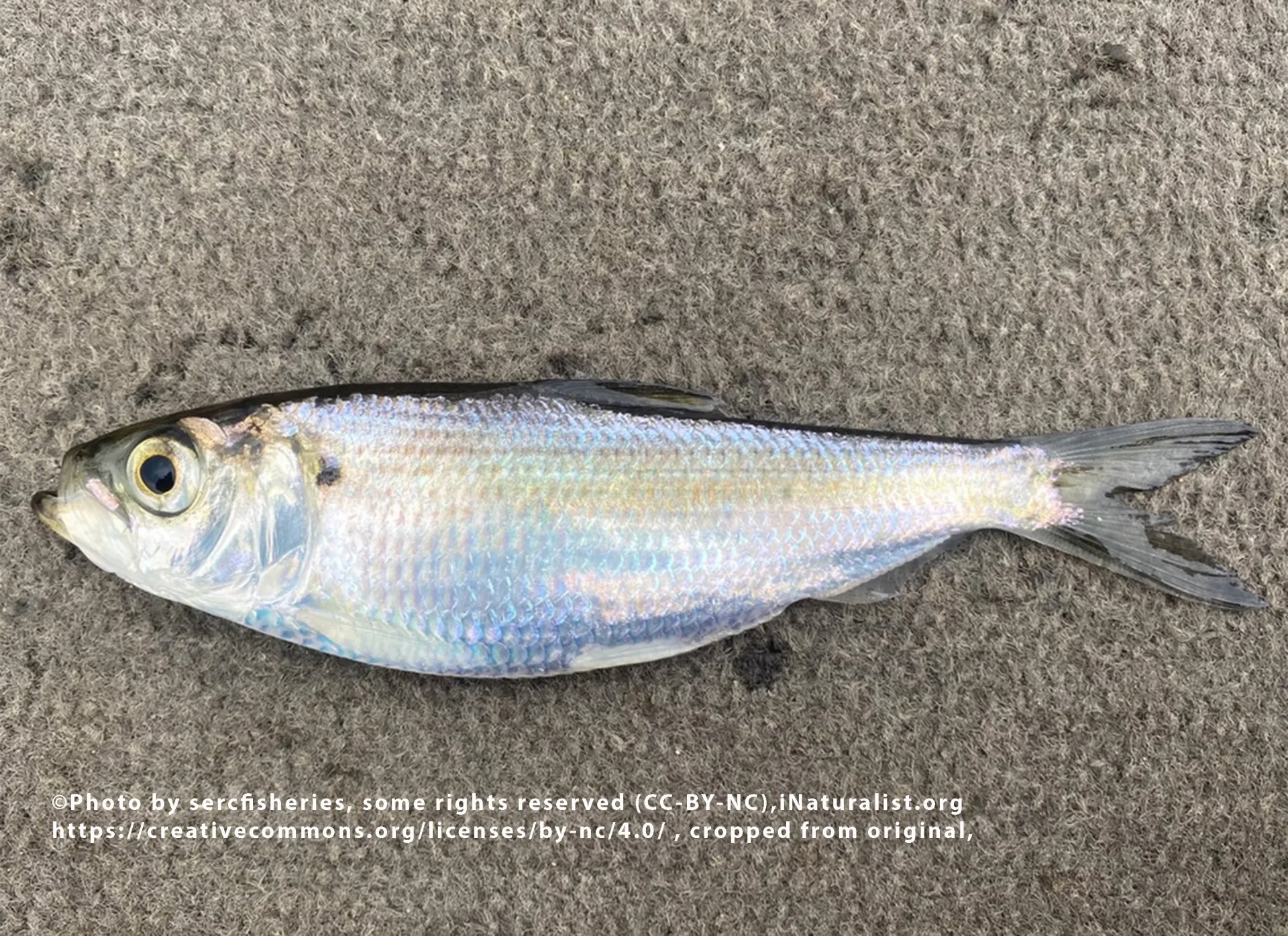
Deep compressed silver body that tapers to a forked tail. Back and upper sides appear silver/gray-green that fades to silver/white near belly. Large dark spot located behind gill plates may have several more fainted spots along upper back.Single triangular dorsal fin. Small upward-facing mouth with lower jaw protruding forward. Tip of lower jaw darkley colored
Average Maximum Size:
61 cm (24 in)
Adults Distinguishing Characteristics:
The lower jaw of the Hickory Shad protrudes steeply upwards when compared to American Shad and Atlantic Menhaden.Hickory shad lack the filamentous thread on the dorsal fin of the Threadfin Herring or gizzard shad. The Blueback Herring differs from the Hickory Shad with its single body spot without any trailing markings.
Juveniles Distinguishing Characteristics:
NA
Range:
Maine to Florida
Habitat:
Adults can be found in coastal saltwater and brackish estuaries/tidal rivers during warmer months. Can be found in fresh open waters of large rivers. Spawning occurs in tidal freshwater. Adults return to the sea after spawn.