
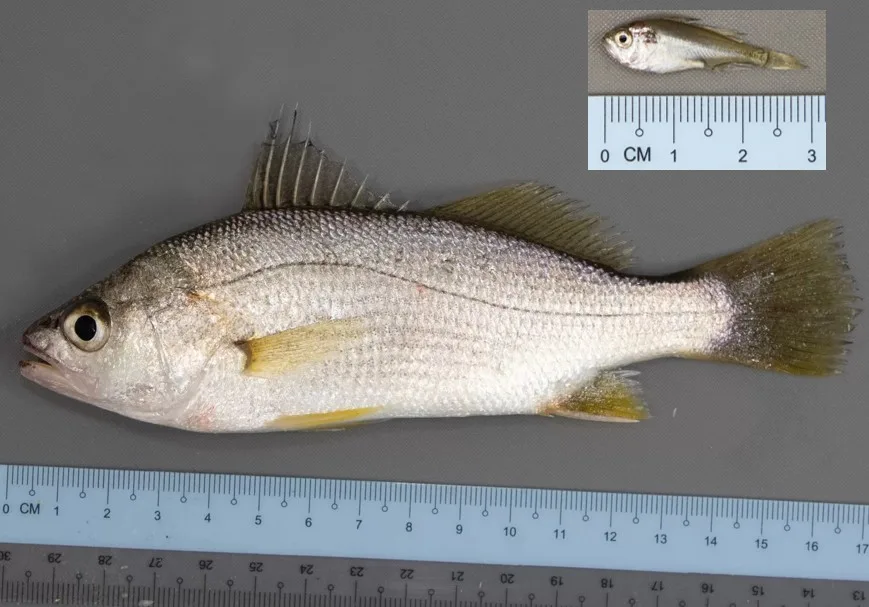
The silver perch (Bairdiella chrysoura) is a small coastal fish in the drum family that is common throughout Georgia’s estuaries, from tidal creeks to open bays. Typically growing to less than eight inches, it has a sleek silver body with a faint yellow tint on the fins, allowing it to blend into the reflective waters of salt marshes and shallow coastal habitats. In Georgia, silver perch are most abundant in warmer months, when they move into estuarine waters to feed and use the marsh as a nursery. These habitats, rich with smooth coord grass, muddy bottoms, and tidal flow provide both protection from predators and access to abundant food sources.
Silver perch have a fast-paced life history that reflects the dynamic nature of estuaries. They mature early, often within their first couple of years, and may only live to five or six years, allowing populations to rebound quickly after environmental changes. Spawning takes place in higher-salinity portions of bays and estuaries from spring through summer, when water temperatures rise and food is plentiful. Juveniles then move into protected tidal creeks and marsh edges, where they feed on small crustaceans, worms, and other invertebrates. As they grow, their diet expands to include larger prey, and they become an important link in the estuarine food web both as predators and as prey for larger fish like red drum and spotted seatrout.
Like many members of the drum family, silver perch are well adapted to life in Georgia’s ever-changing estuaries. They tolerate a wide range of salinities, allowing them to move between saltier coastal waters and fresher tidal rivers as conditions shift. One of their most interesting features is a specialized swim bladder connected to the inner ear, which enhances hearing and helps them detect sounds in murky water. Although not targeted as a major sport or commercial species, silver perch are abundant and often used as bait fitting their role in supporting coastal fisheries. Their presence in high numbers is also a sign of a healthy estuary, making this small fish an important indicator of the productivity and balance of Georgia’s coastal ecosystems.
Did you know? Recreational anglers often call silver perch “yellowtails” due to the yellow color on their anal fins and are notorious bait stealers especially when fishing with shrimp!