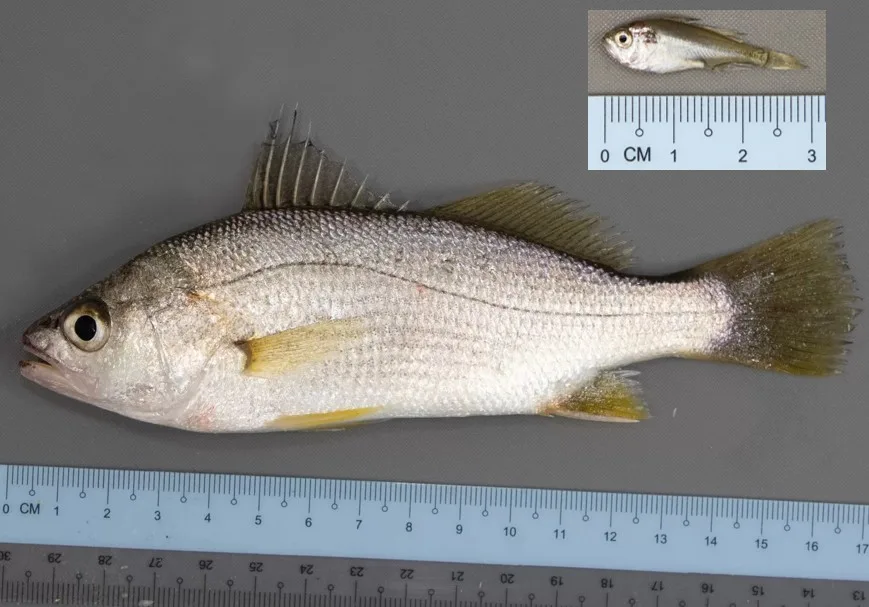
Five years ago, the Estuarine Fish Monitoring Cooperative (EFMC) started asking a simple question:
What’s swimming around our Georgia estuaries?
Now, after five years of sampling, hundreds of volunteers, biologists, commercial fishermen, and research partners have helped answer that question in a BIG way.
And by big, we mean…
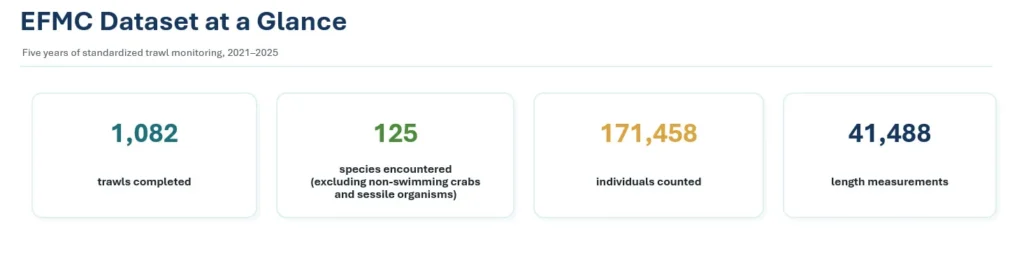
- 1,082 trawl samples
- 🐟 171,458 fish and invertebrates counted
- 📏41,488 animals measured
- 125 different species recorded
Not bad for a project that started with a few nets, a lot of determination, and probably more sunscreen than anyone wanted to wear.
So…What Did We Catch?
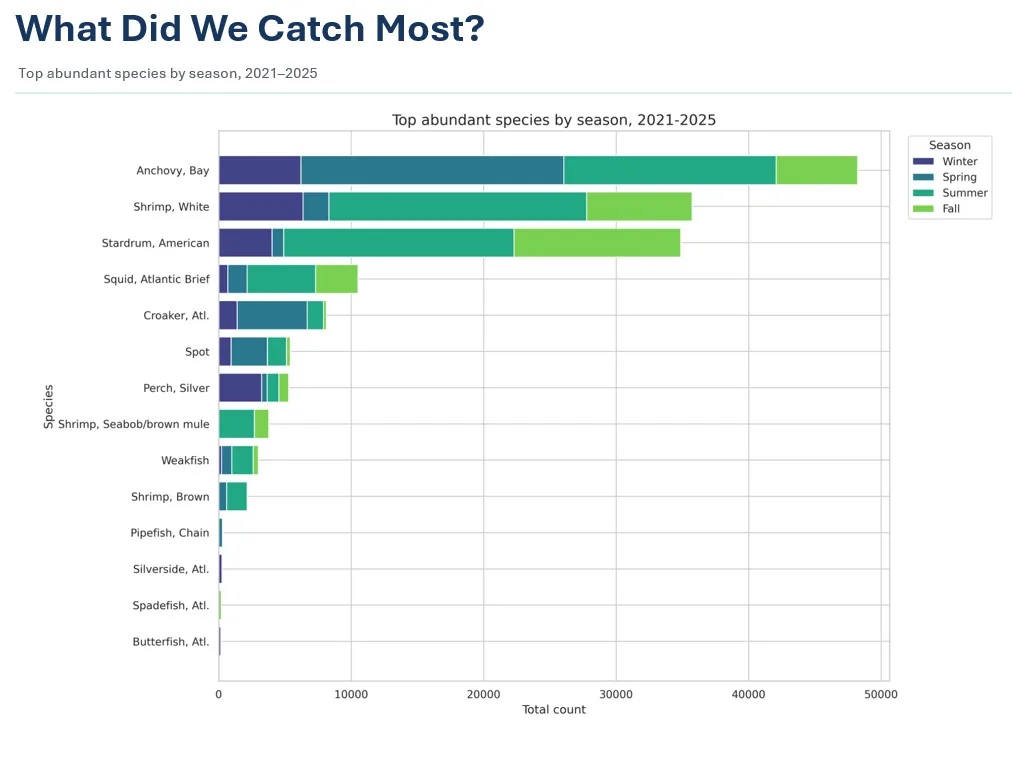
Some fish clearly didn’t get the memo about personal space. Across five years of monitoring, a few species absolutely dominated our catches:
- Bay Anchovy
- White Shrimp
- American Stardrum
Meanwhile, White Shrimp, Bay Anchovy, Atlantic Brief Squid, Spot, Atlantic Croaker, Silver Perch, and Weakfish proved they weren’t just abundant—they were dependable.
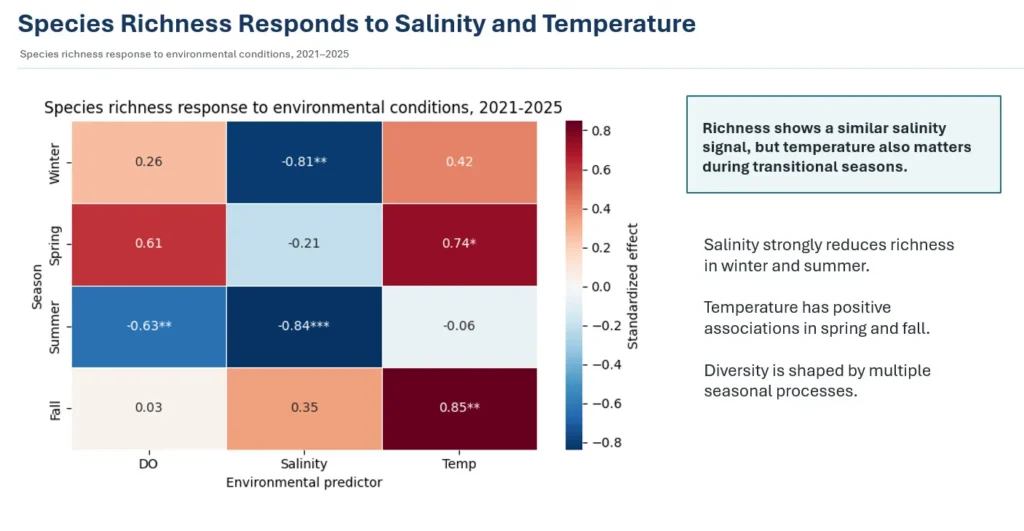
If you’ve ever wondered when Georgia estuaries are absolutely packed with life… It’s summer.
Summer produced:
- ☀️ the highest catches
- 🌿 the greatest average diversity
- 🐠 the busiest trawl nets
One of the biggest surprises from five years of data wasn’t about a single fish—it was about salt. As salinity increased, we consistently caught fewer fish and fewer species. That tells us freshwater flowing into our estuaries isn’t just important—it helps shape the entire fish community.
In other words…The estuary isn’t just where freshwater meets saltwater. It’s where the balance between the two determines who gets to live there.
Then Nature Gave Us an Experiment
Nobody orders a drought. But when coastal Georgia experienced an unusually dry period during late 2025 into spring 2026, something remarkable happened. The estuary became saltier than normal.
Then, shortly afterward…Fish abundance dropped.
Not only that—but the community itself changed. Some species became less common, while more marine species, like Atlantic Brief Squid, moved in. It’s one of the clearest examples yet that changes in freshwater flow can reshape the estuary in real time.
None of This Happens Without You
One of the coolest parts about EFMC is that this isn’t just a scientist project. It’s a community science project! Every person who helps deploy a net, identify a fish, record data, or simply asks questions helps build one of the most comprehensive estuarine fish datasets in coastal Georgia.
Five years ago, we were just beginning.
Today, we have a powerful baseline for understanding how Georgia’s estuaries change through the seasons—and how they’ll respond to future challenges like drought, sea level rise, and changing freshwater inputs. The fish aren’t done surprising us, and neither are Georgia’s estuaries.
As we continue adding to this growing dataset, we’ll be able to answer even bigger questions about fisheries, habitat, water quality, and the changing coast. Until then we’ll keep asking the same question that started it all:
What’s my bait?
“Five Fun Fish Facts from Five Years”
- We counted 171,458 individual animals.
- We found 125 species, proving Georgia estuaries are anything but boring.
- ☀️ Summer consistently had the biggest catches—apparently fish enjoy vacation season too.
- 🦑During the 2025–2026 drought, Atlantic Brief Squid became much more common as saltier conditions moved in.
- Every trawl adds another piece to the puzzle of understanding our changing coast.