
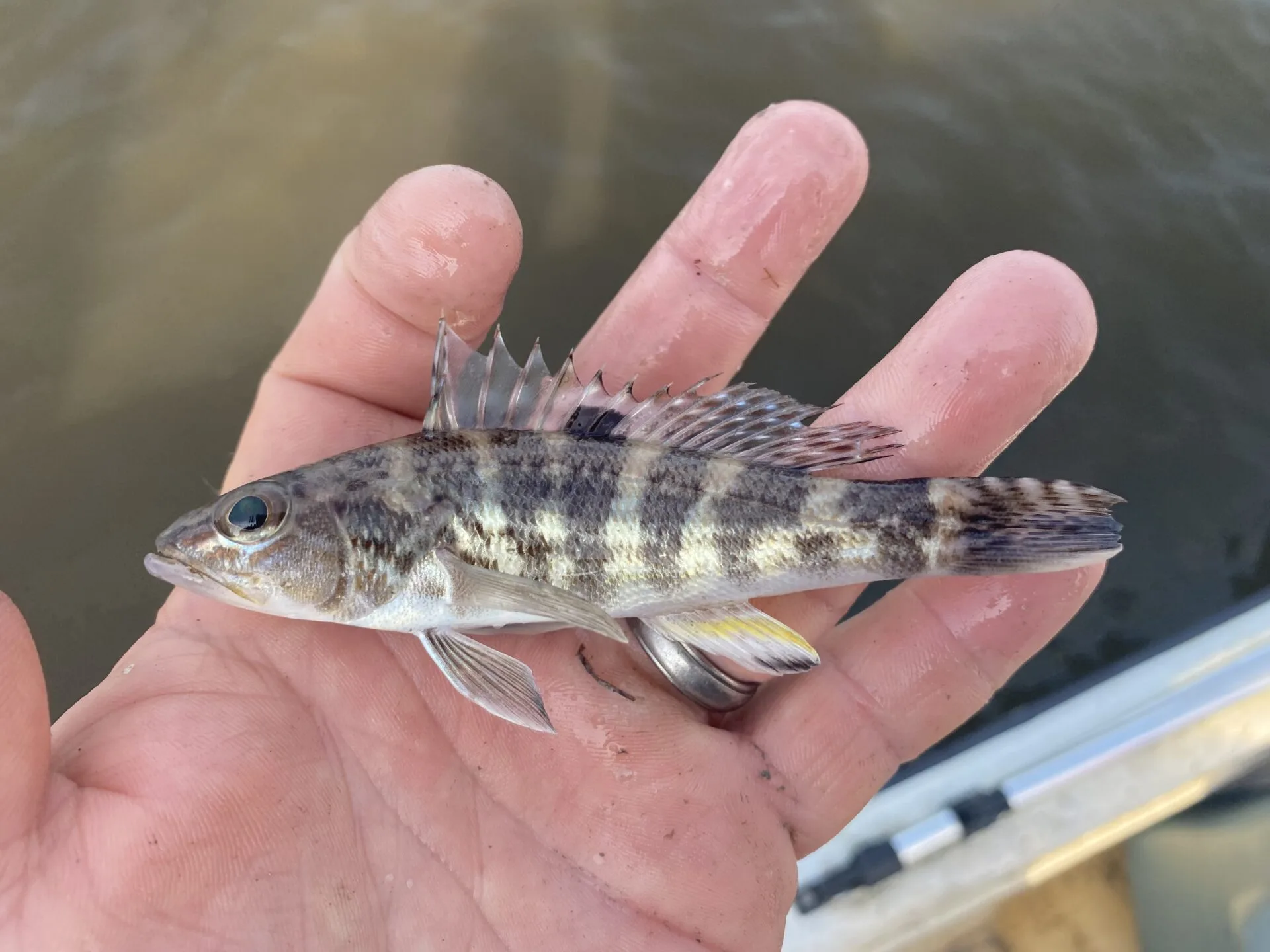
Tucked along the edges of Georgia’s vast estuarine system is an important connection to one of the coast’s lesser-known fish: the rock sea bass (Centropristis philadelphica). While adults are most often associated with offshore reefs, ledges, and live-bottom habitats, they also depend on inshore areas during key stages of their life cycle. Georgia’s productive salt marshes and estuarine waters fuel food webs that ultimately support species like rock sea bass, making these habitats an essential foundation for offshore fisheries. Though rarely larger than about 10 inches, rock sea bass are recognizable by their olive-brown bodies with faint vertical bars, a dark spot near the middle of the dorsal fin, and subtle flashes of blue and orange on the head and fins.
Rock sea bass are bottom-oriented predators that feed on small fish and invertebrates associated with structured habitats. Many of these prey species originate in or rely on estuarine nursery areas before moving offshore, directly linking Georgia’s estuaries to the growth and diet of reef-dwelling fish. Juvenile rock sea bass may also use nearshore and softer-bottom habitats adjacent to estuaries before shifting to deeper, more structured environments as they mature. Like other sea bass species, rock sea bass exhibit protogynous hermaphroditism, beginning life as females and later transitioning to males, an adaptation that supports reproductive success as populations and conditions change.
For anglers and coastal residents in Georgia, this connection underscores why healthy estuaries matter far beyond the marsh. The same tidal creeks and estuarine systems that support shrimp, crabs, and juvenile fish also underpin offshore species like rock sea bass. Protecting water quality, conserving marsh habitat, and maintaining estuarine productivity all play a critical role in sustaining Georgia’s diverse and resilient offshore fisheries.