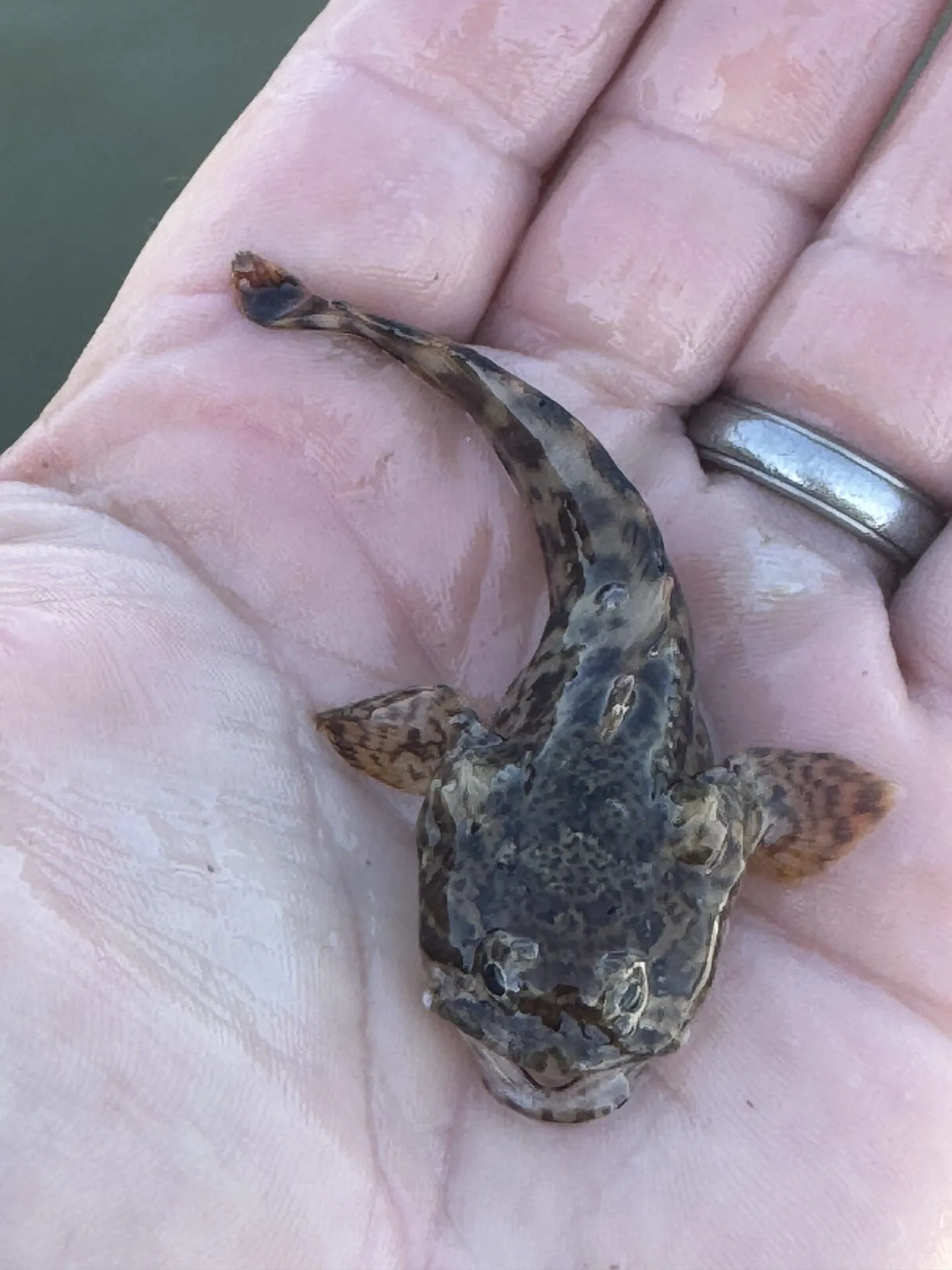
If you’ve spent time around Georgia’s tidal creeks, docks, or oyster reefs, chances are you’ve crossed path knowingly or not, with the oyster toadfish (Opsanus Tau). This stocky, bottom‐dwelling fish is a year‑round resident of Georgia’s estuaries, where it prefers dark, sheltered spots such as oyster reefs, pilings, rocks, and even discarded shells or debris. Ranging from New England to Florida, oyster toadfish are especially well suited to Georgia’s warm, productive coastal waters thanks to their tolerance for low oxygen, fluctuating salinity, and turbid conditions common in estuaries.
Oyster toadfish have a fascinating life history closely tied to estuarine structure. During late spring and summer, males establish nests beneath hard surfaces and produce distinctive grunts and “boat whistle” calls using specialized muscles around their swim bladder to attract females (Link to a recording of an oyster toadfish’s vocalization around Sapelo Island). After eggs are laid, the male stays behind to fiercely guard and fan them until they hatch, providing rare parental care among fishes. The young remain protected in the nest for weeks before venturing out onto nearby reefs. Their mottled coloration, loose scaleless skin, and fleshy flaps or “whiskers” help them blend in perfectly with oyster shells and muddy bottoms, making them highly effective ambush predators of crabs, shrimp, mollusks, and small fish.
Beyond their odd appearance and grumpy reputation, oyster toadfish play an important ecological role in Georgia’s estuaries. Researchers from NOAA and several universities use their loud vocalizations to monitor the health of oyster reefs, since active calling often signals successful reef habitat. While rarely targeted by anglers, this tough, vocal fish is caught occasionally especially when bottom fishing with cut bait. Even though they rarely reach a foot in length their powerful jaws, sharp gill plates and spiny dorsal fins are all reasons to take caution when handling them.
Fun facts: Oyster toadfish have some of the largest eggs of any coastal fish, and were even sent into space by NASA to study fish balance and development in microgravity.