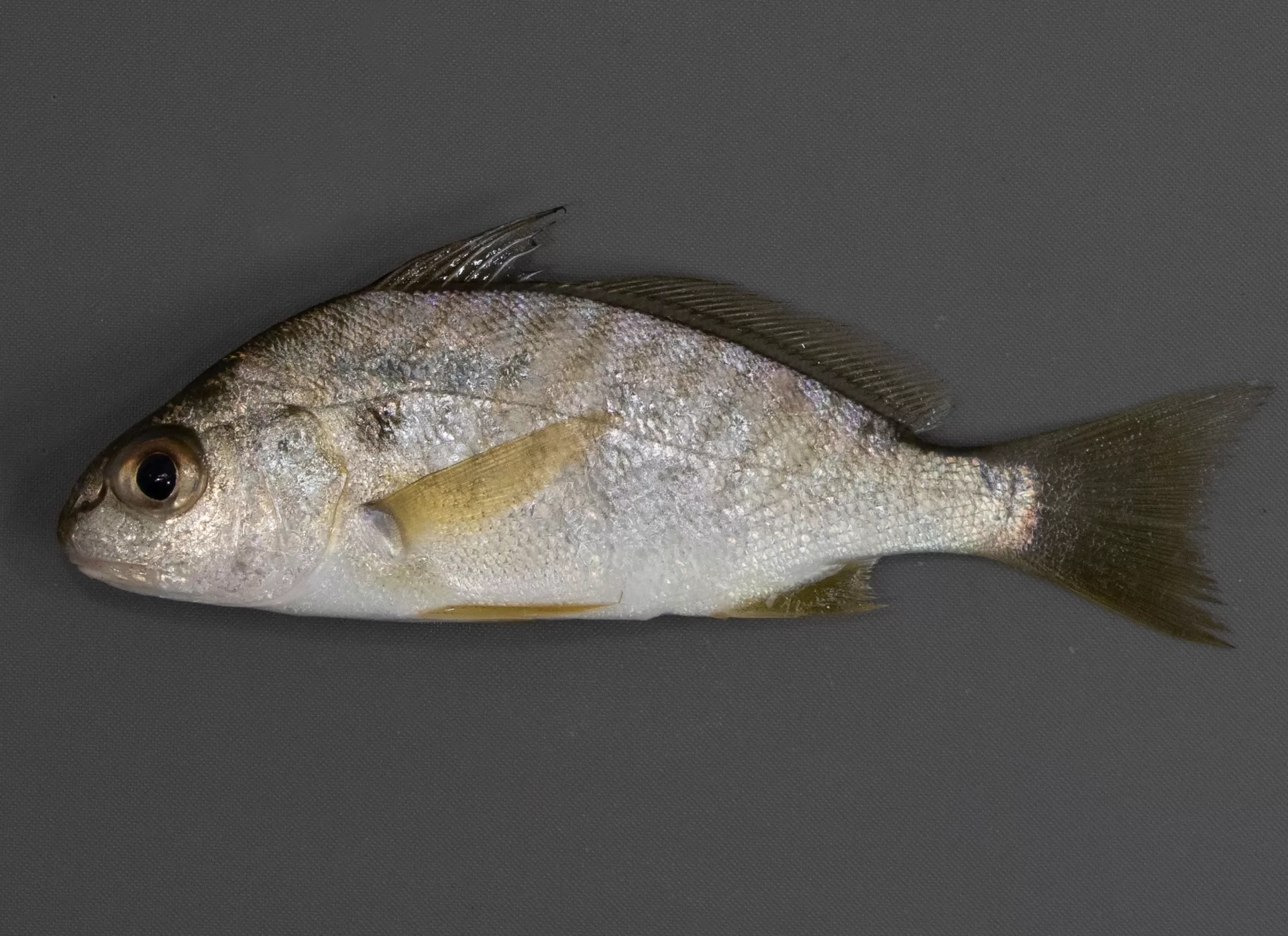
031_CroakerAtlantic_Juv_FP
Atlantic Croaker
Hardhead, King Billie, Grumbler, Golden Croaker
Micropogonias undulatus

Description:

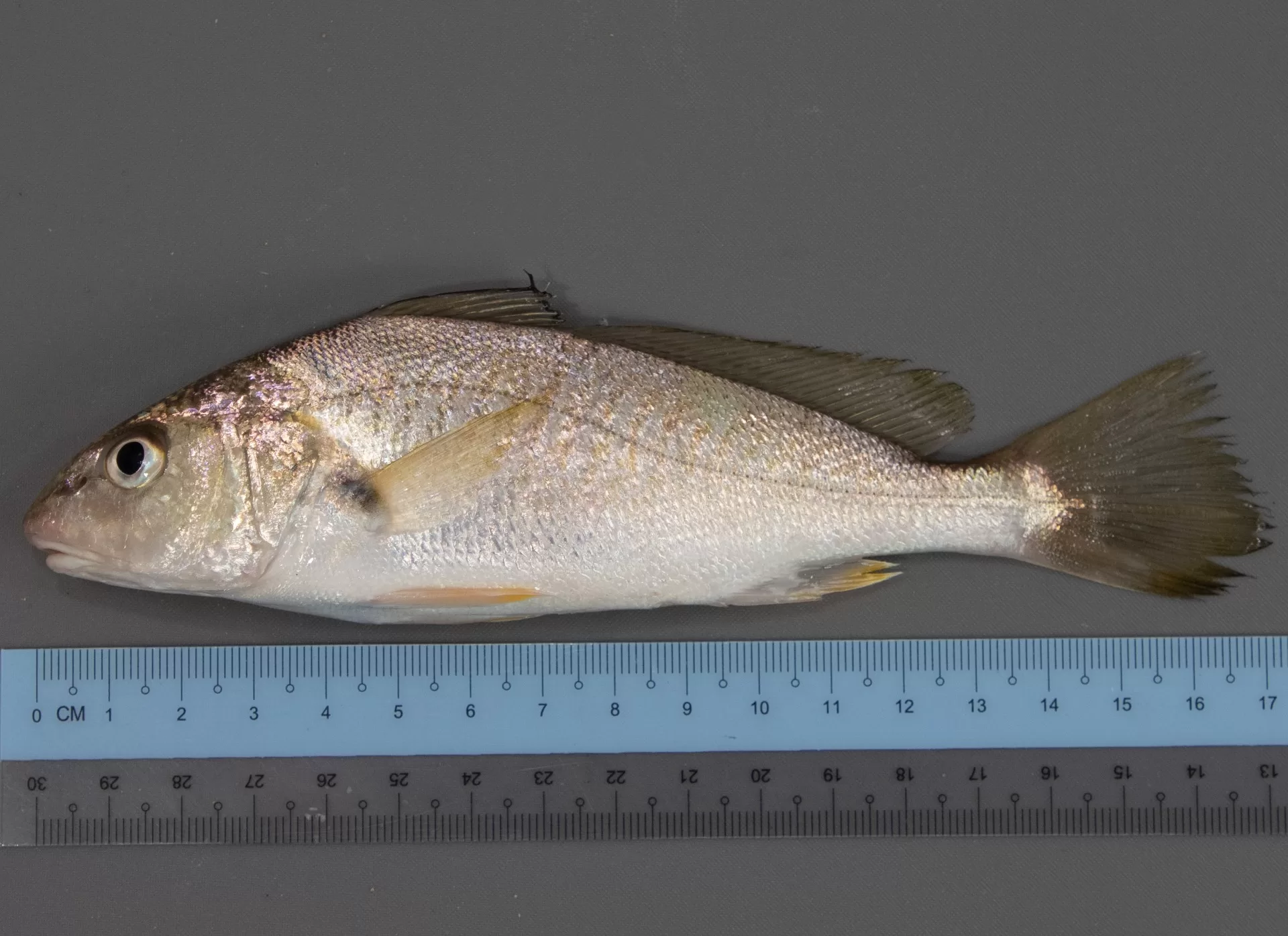
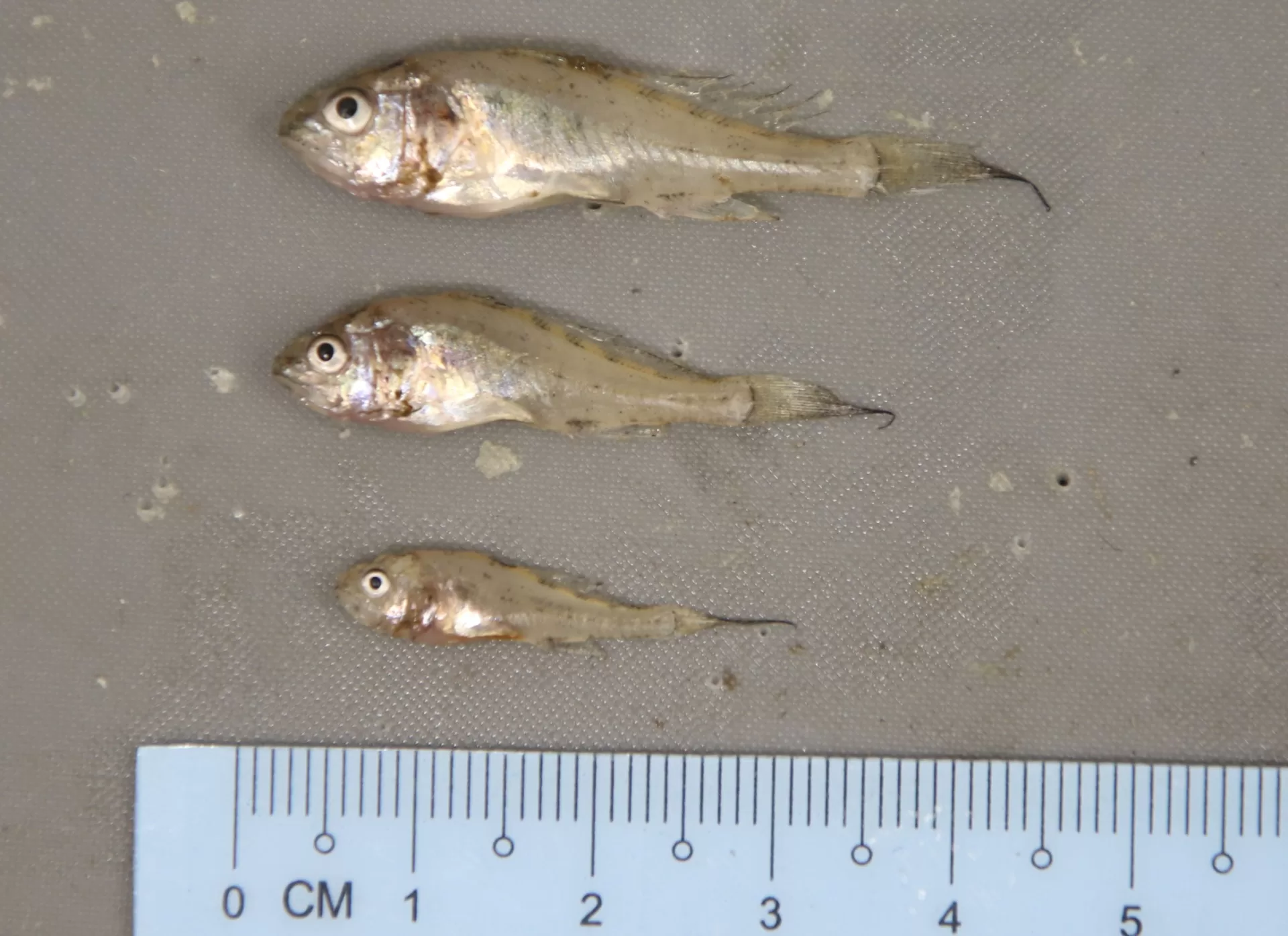
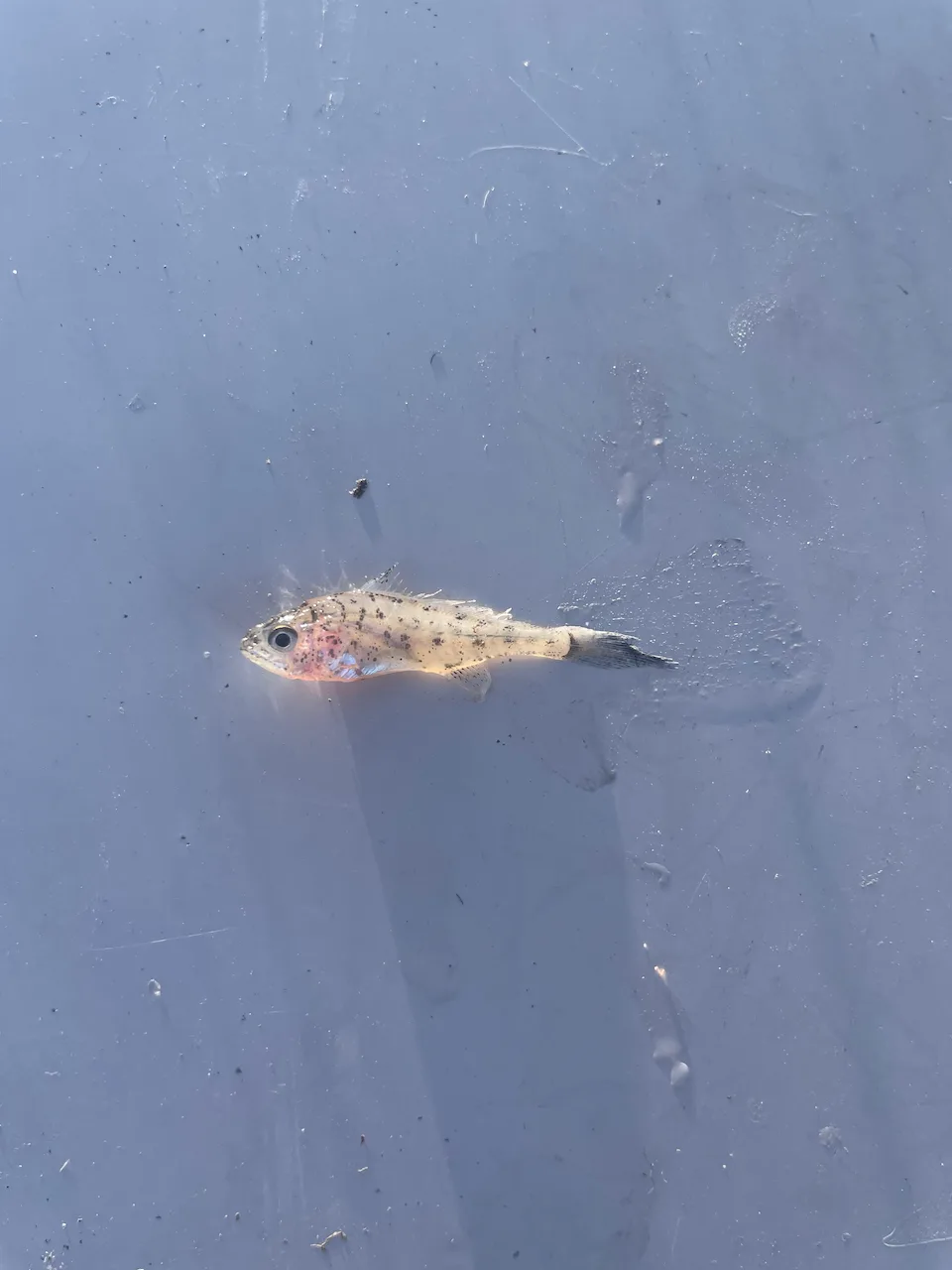
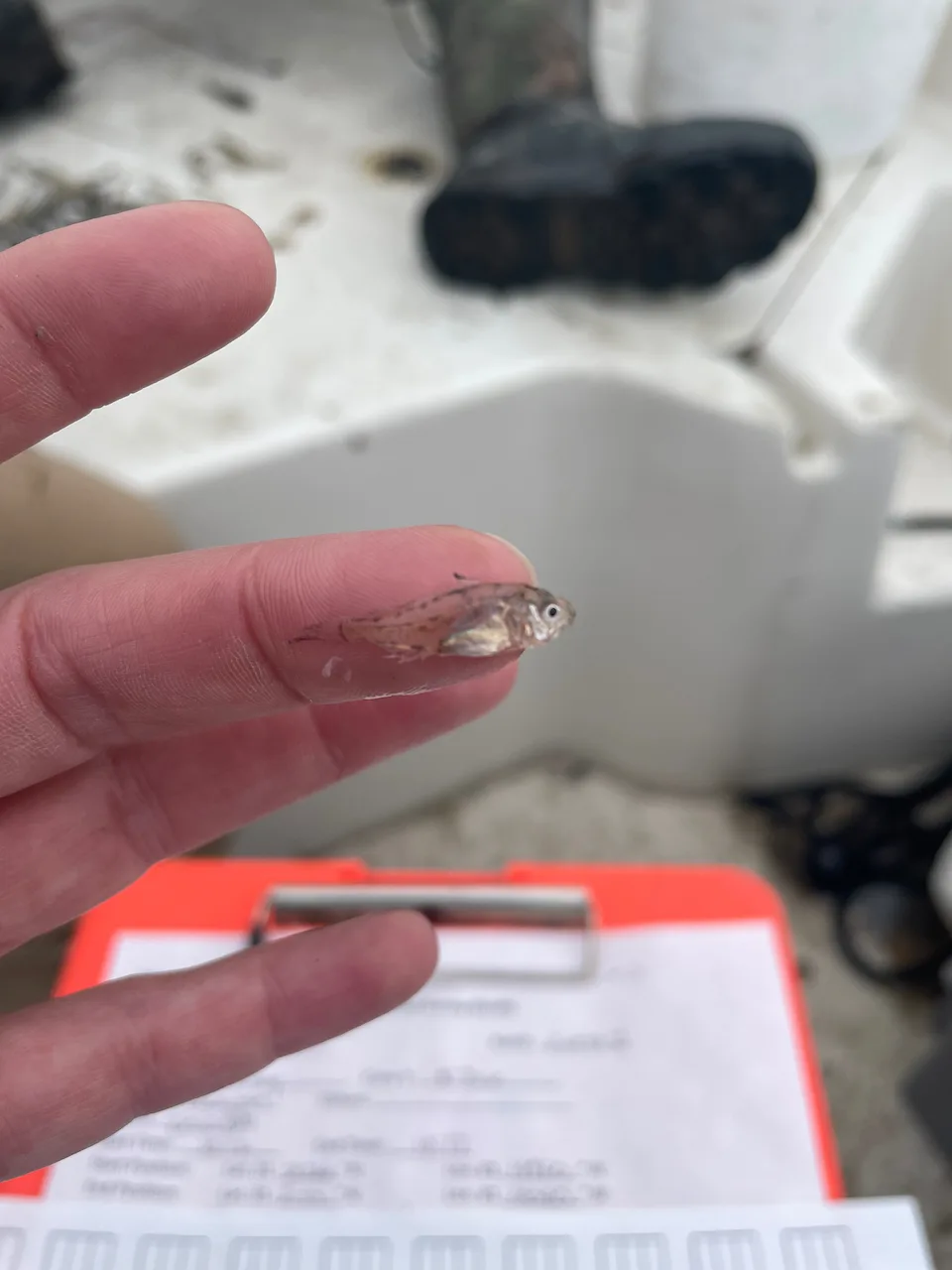
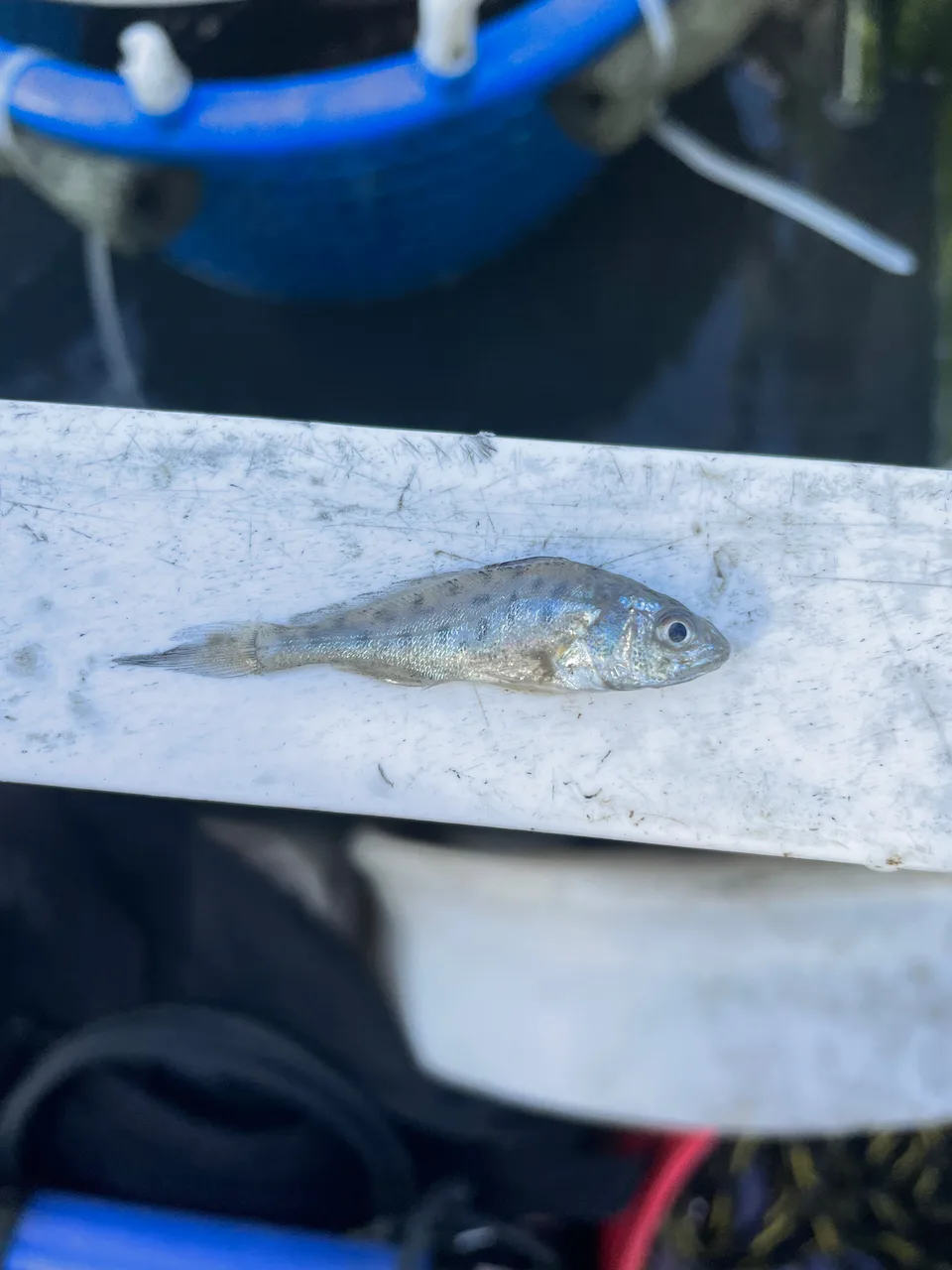
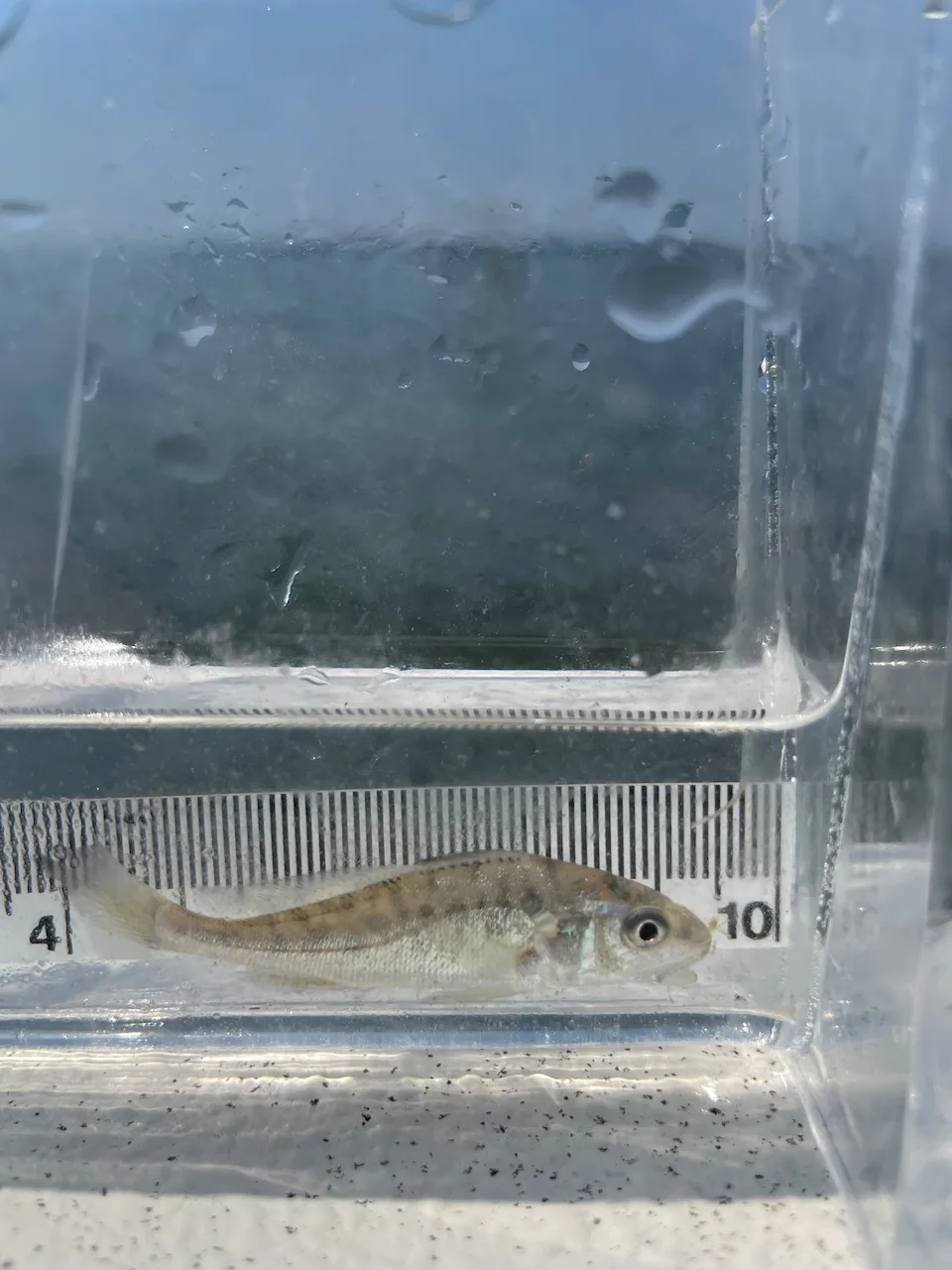
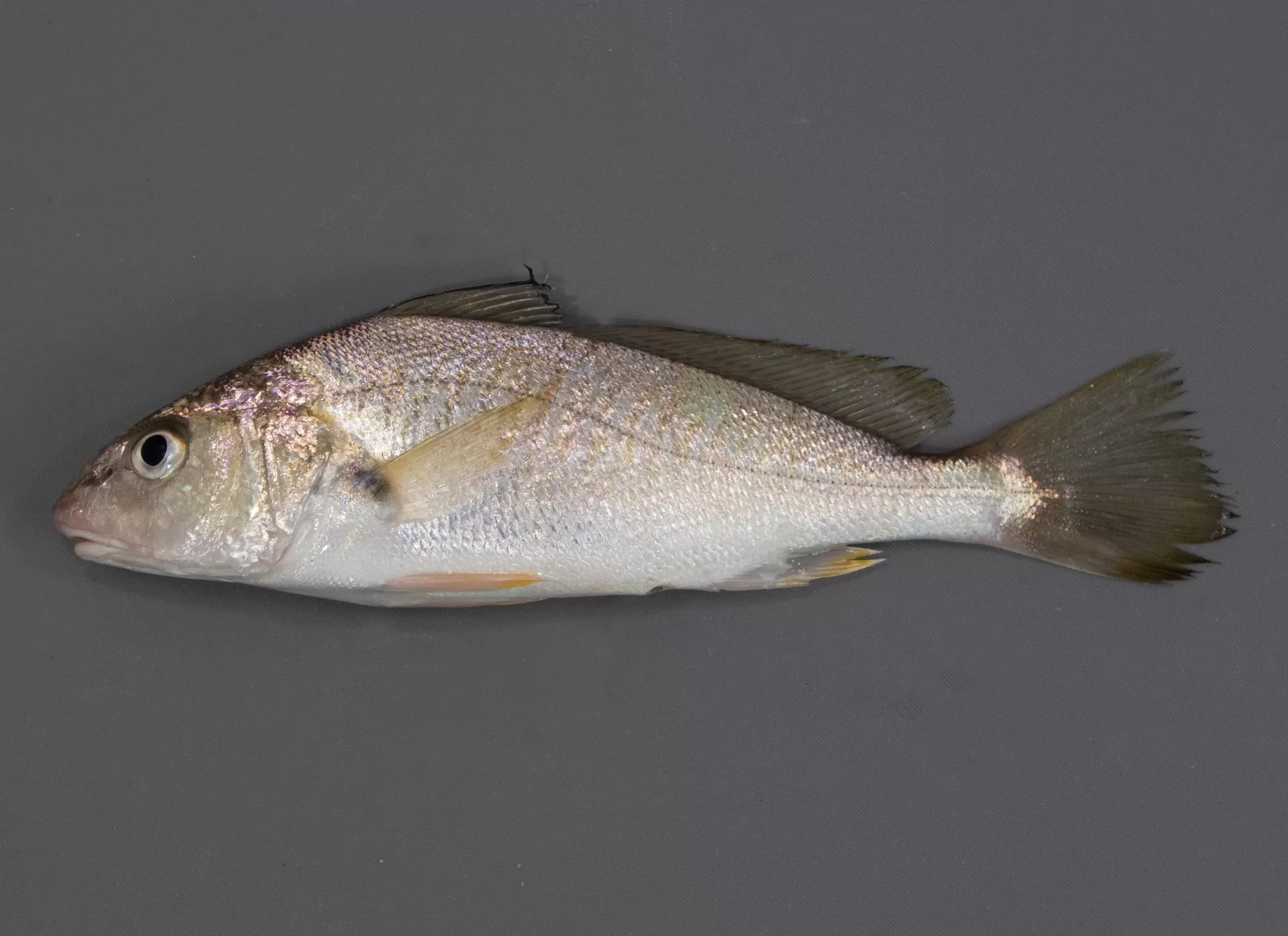
Slightly diagonal bars across upper half of body, fades to white near belly. Upper half of body is bronze, tan, and/or silver while the lower half of the body near the belly is typically white. May have a dark spot at the base of pectoral fins. Deeply notched single dorsal fin that may appear to be two separate fins, with the first spinous and the second soft. Juveniles show up in estuaries between February-May, and are translucent to white in color with a series of dark spots on its trunk, and along its dorsal side. Its tail is lanceolate (pointed), with the lower edge longer than the top edge.

Average Maximum Size:

51 cm (20 in)

Adults Distinguishing Characteristics:

Atlantic Croaker are not as deep bodied as Spot which also have a more humped back and a blunter nose. The location of the spot at the base of the pectoral fin is distinctive of the Atlantic Croaker, whereas it is behind the gill plate on Spot. The tail shapes are distinctive between adults as well, with the Atlantic Croaker having a tail that is slightly pointed in the center and Spot's tail istruncate to convex (e.g., forked).

Juveniles Distinguishing Characteristics:

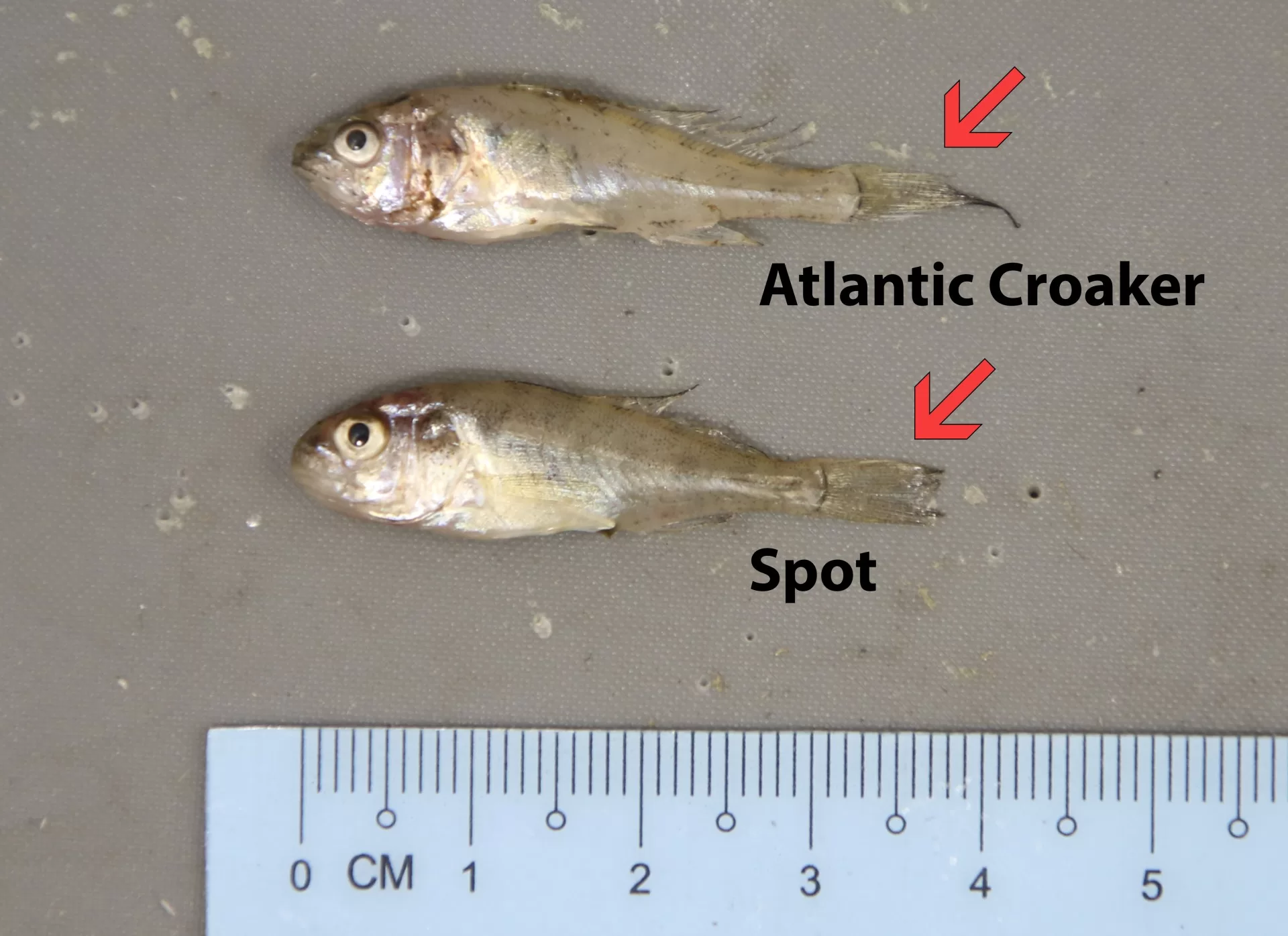
Young-of-year Atlantic Croaker and Spot first appear around the same time in late winter and early spring in Georgia. Atlantic Croaker have a lanceolate (pointed) tail where the lower portion of the tail is longer than the top. Juvenile Spot's tail are truncate. Juvenile Atlantic Croaker will have a series of spots along their dorsal side that will become stripes as they grow.

Range:

Massachusetts to Argentina

Habitat:

Found in coastal salt and brackish waters with sandy or muddy bottoms

Notes:

Will often croak when brought out of the water.

Regulated Species:

Yes
Species: Micropogonias undulatus
Family: Sciaenidae
Family Description: Drum
Mouth Type: Subterminal, Terminal
Tail Type: Truncate, Lanceolate
Dorsal Type: Single, Split

Similar Species

Click on the image below to view details.

Spot
Spot