Spot
Spot
Spot Croaker, Virgina Spot, Yellow Belly, Norfolk Spot
Leiostomus xanthurus

Description:

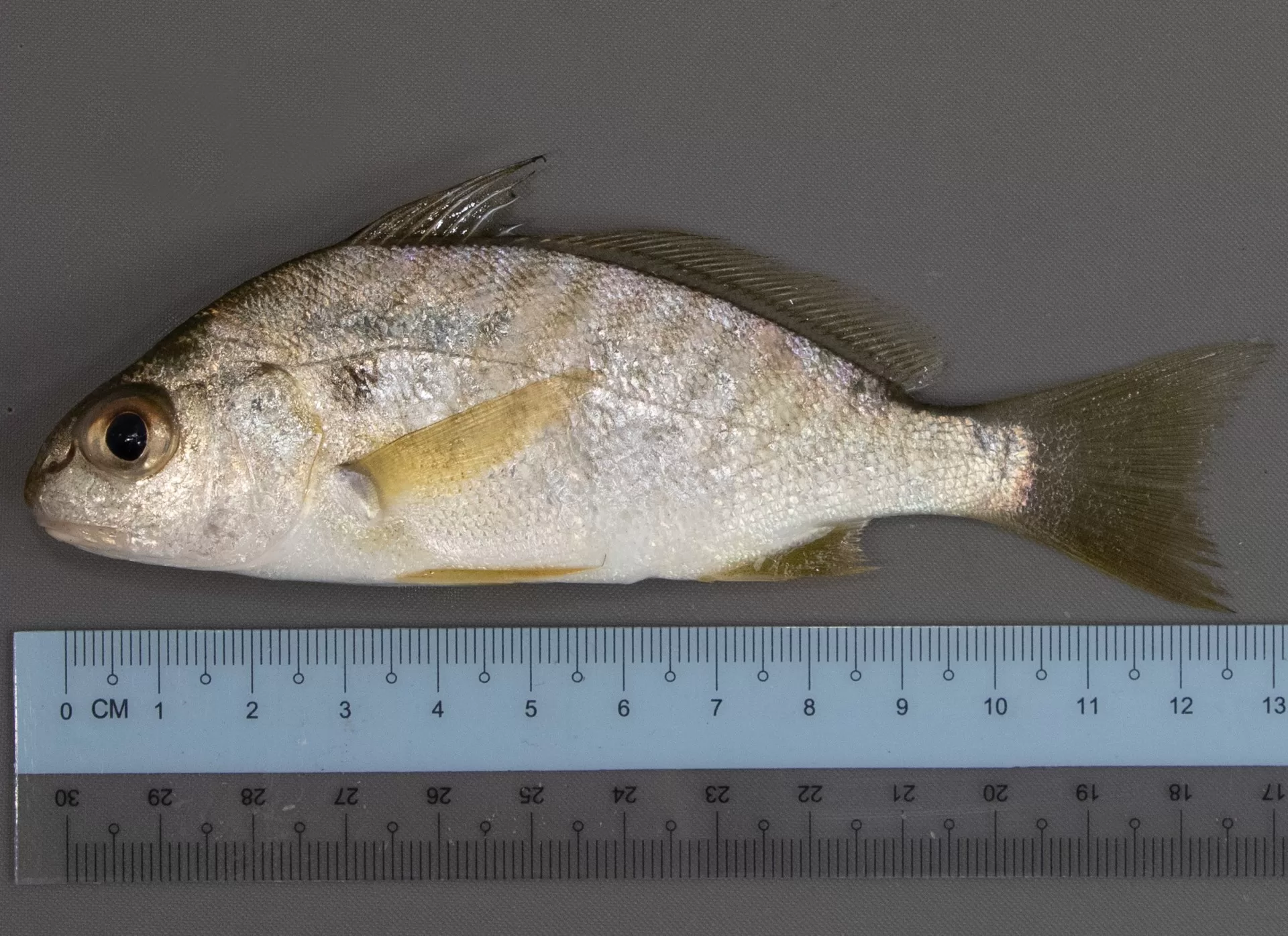
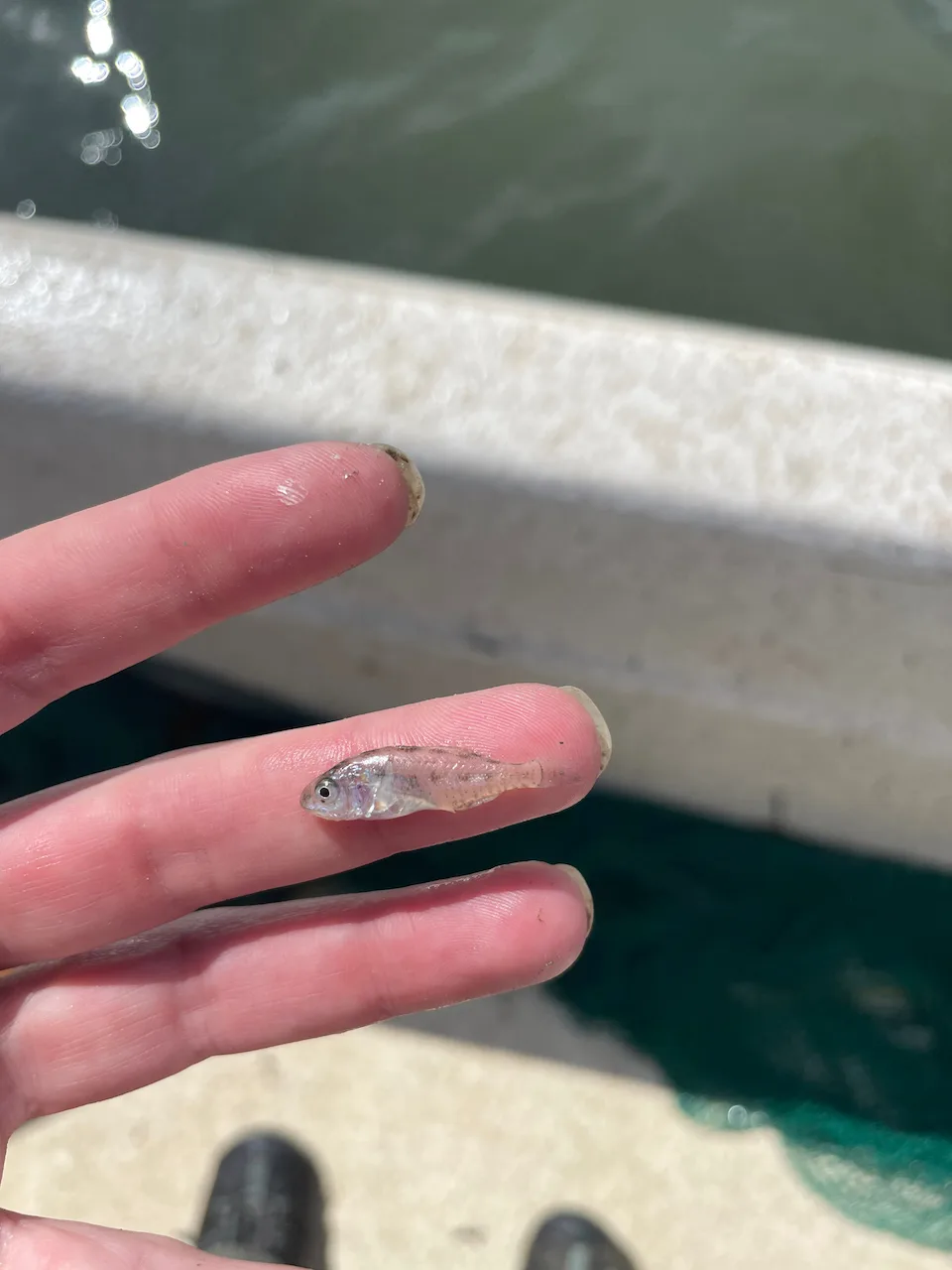
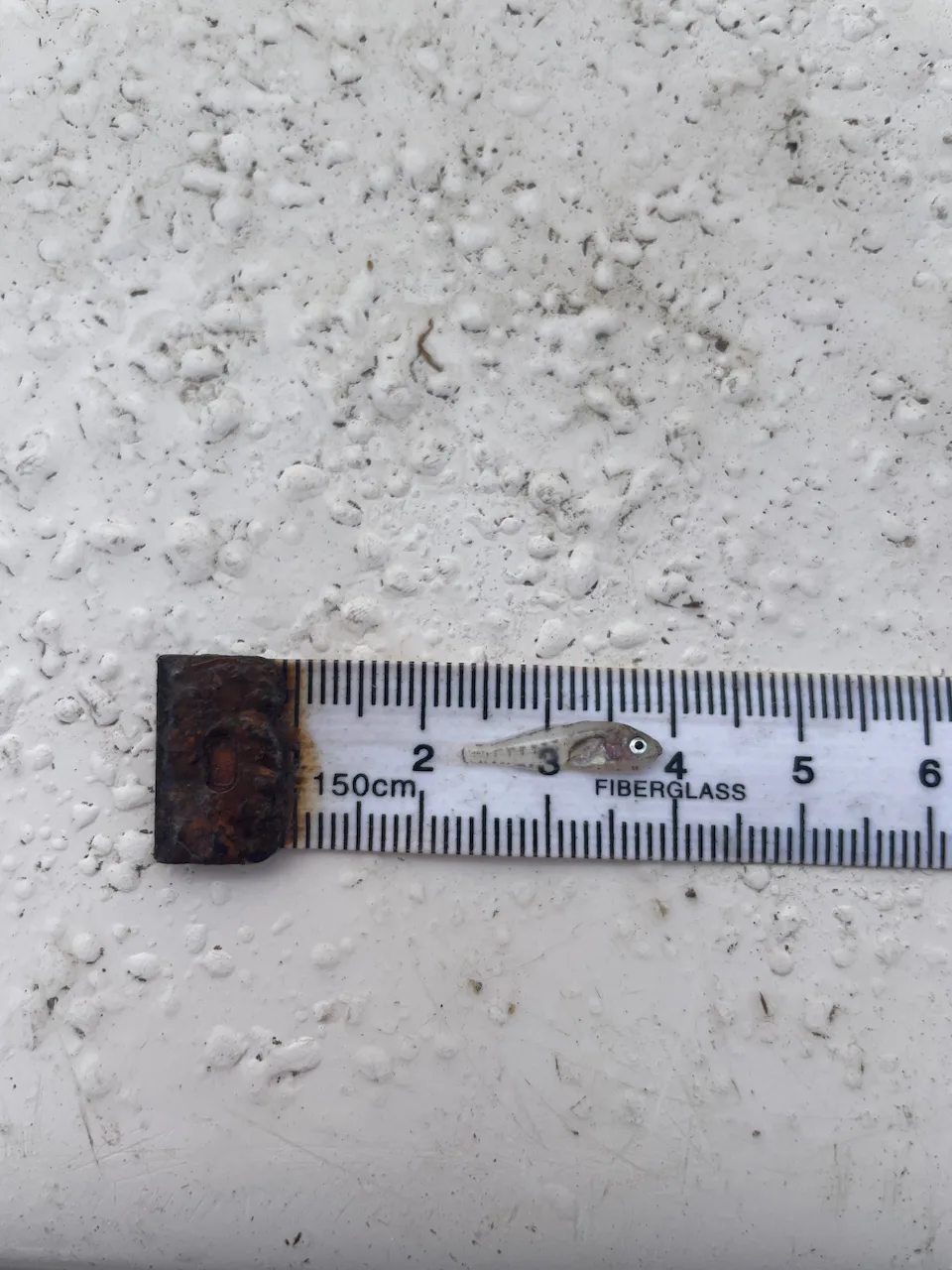
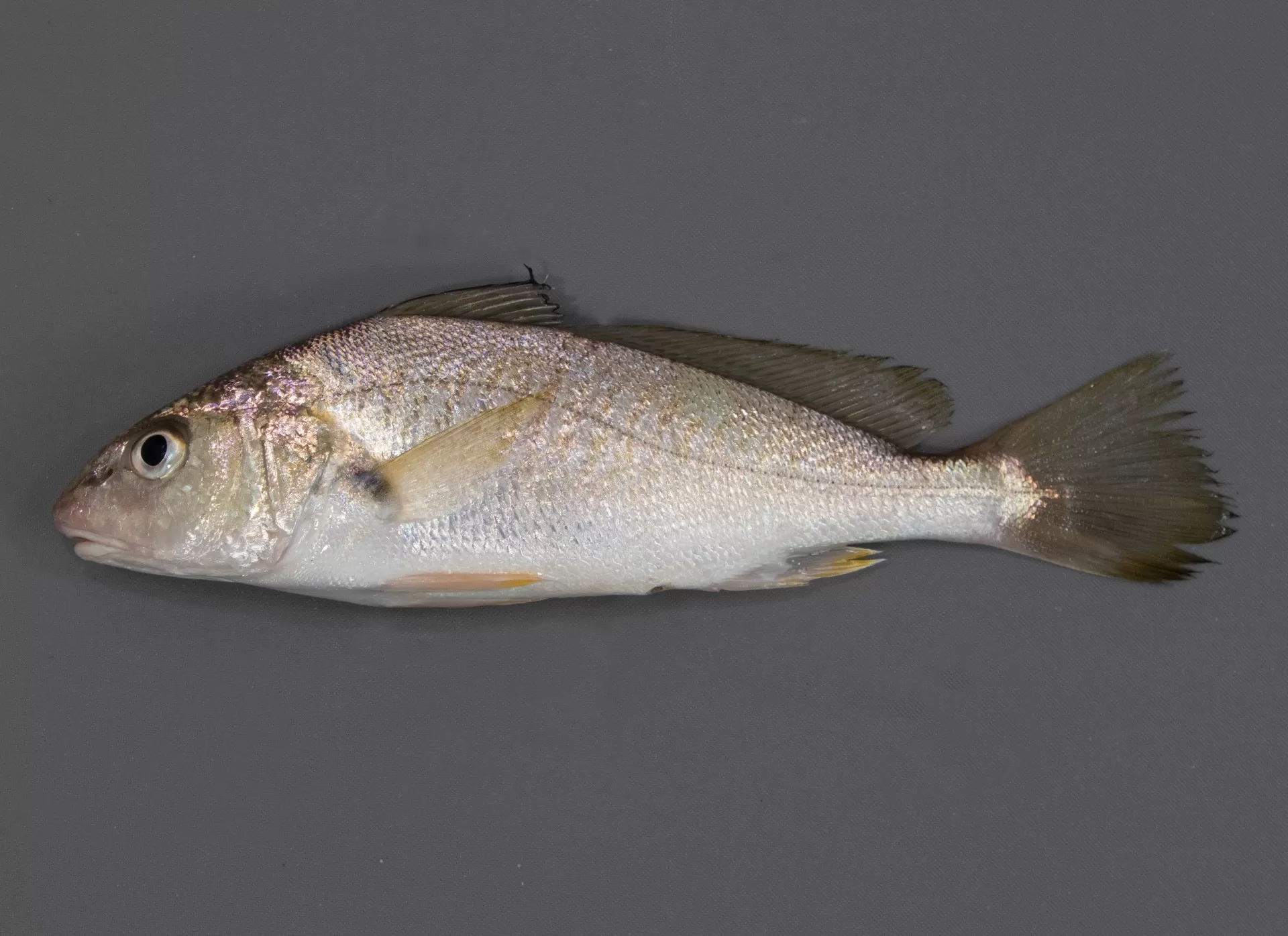
Singular dark spot located behind gill plate above pectoral fins. Slightly diagonal stripes running from back to belly along length of the body. Upper half of body is brown, tan, and/or silver while the lower half of the body near the belly is typically white. Round blunt snout. Deeply notched dorsal fin that looks like two detached dorsal fins, first spinous and second soft. Fins exhibit yellow tinge. Lateral line extends onto dorsal fin.Spot juveniles are white to translucent, with a blunt nose and a truncate (flat) tail, and a dark black spots down its lateral line. They appear in late winter to early spring (February - May).

Average Maximum Size:

38 cm (15 in)

Adults Distinguishing Characteristics:

The Spot features a distinctive dark spot behind its gills and a short rounded snout. Compared to the Spot, the Atlantic Croaker has a less rounded snout, a slight point in the center of its triangular tail, and a dark spot directly at the base of the pectoral fins.

Juveniles Distinguishing Characteristics:

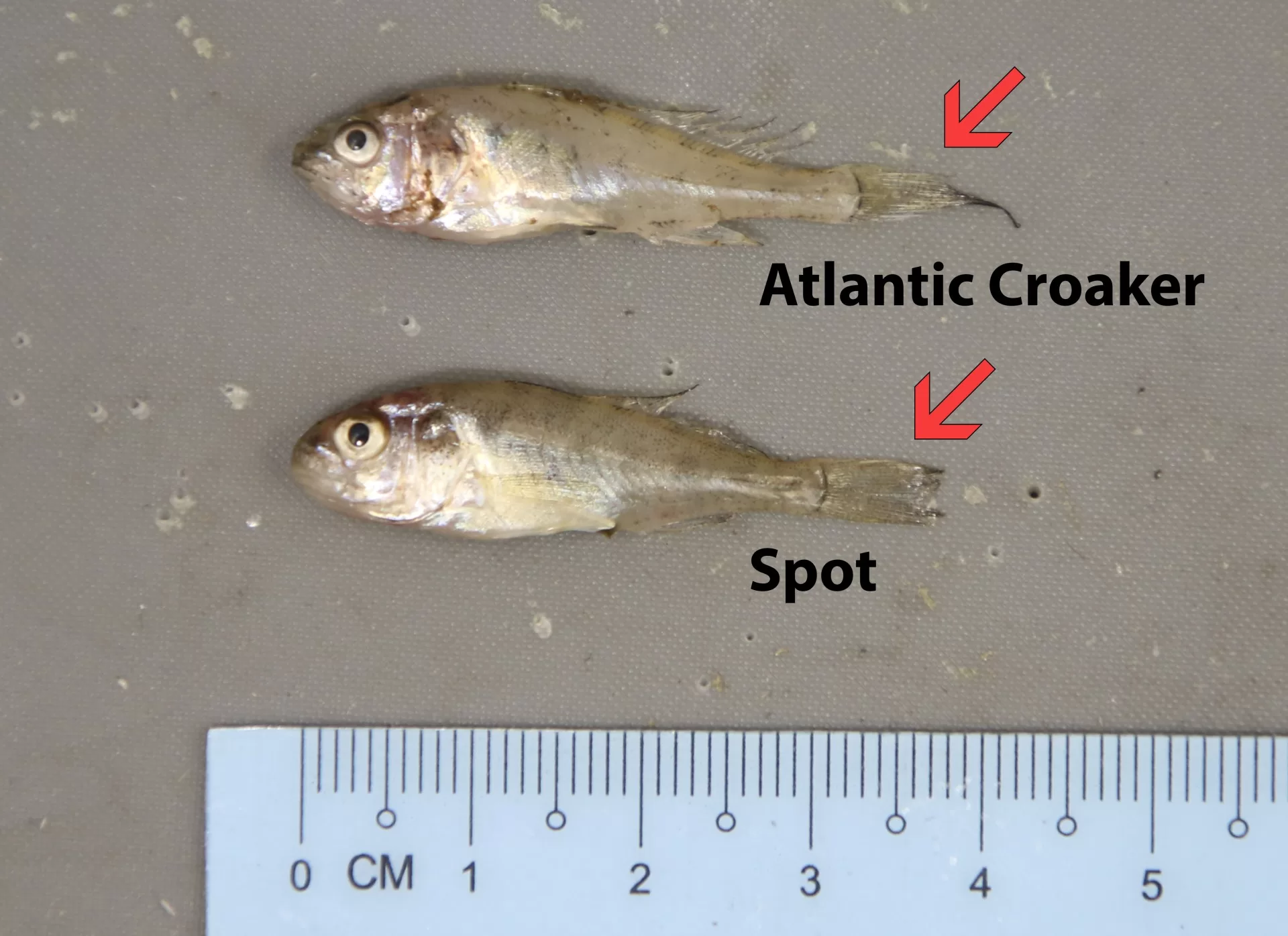
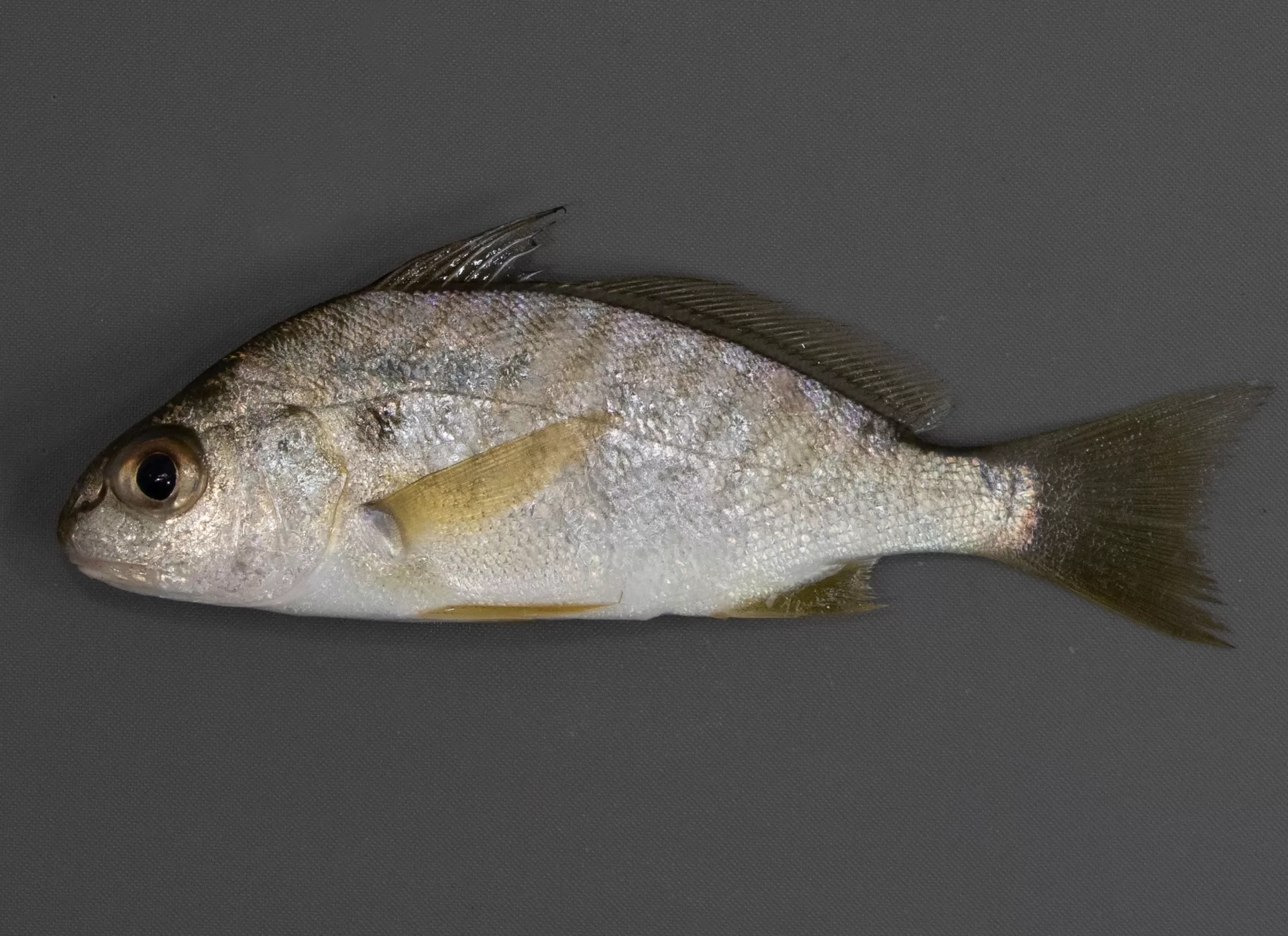
Young-of-year Spot and Atlantic Croaker first appear around the same time in late winter and early spring in Georgia. Spot have a truncate tail and Atlantic Croaker have a lanceolate (pointed) tail where the lower portion of the tail is longer than the top. Juvenile Atlantic Croaker will have a series of spots along their dorsal side that will become stripes as they grow.

Range:

Massachusetts to northern Mexico

Habitat:

Found in waters with sandy or muddy bottoms.

Notes:

Regulated Species:

Yes
Species: Leiostomus xanthurus
Family: Sciaenidae
Family Description: Drum
Mouth Type: Subterminal
Tail Type: Truncate, Forked
Dorsal Type: Single, Split

Similar Species

Click on the image below to view details.

CroakerAtlantic
Atlantic Croaker