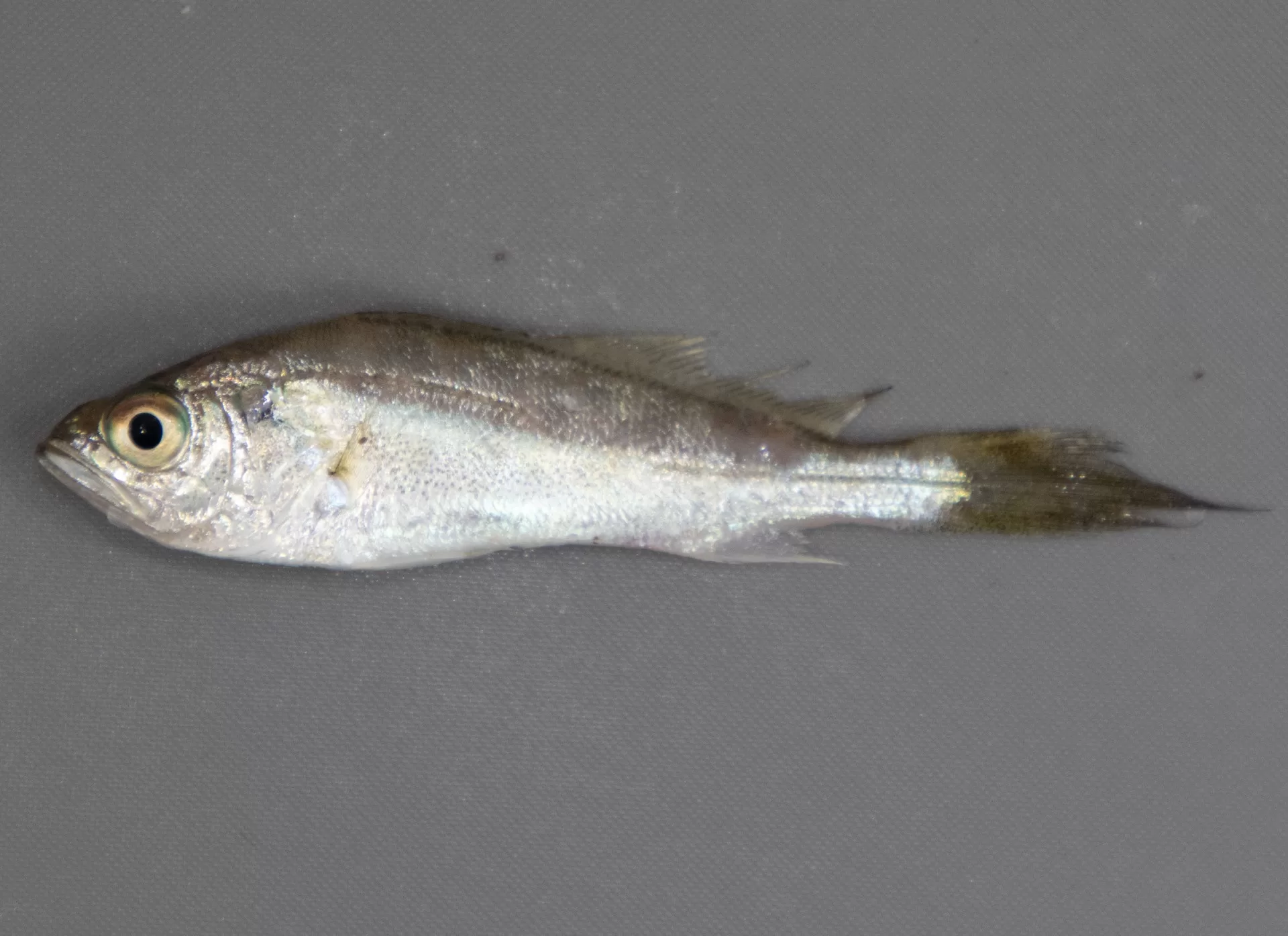
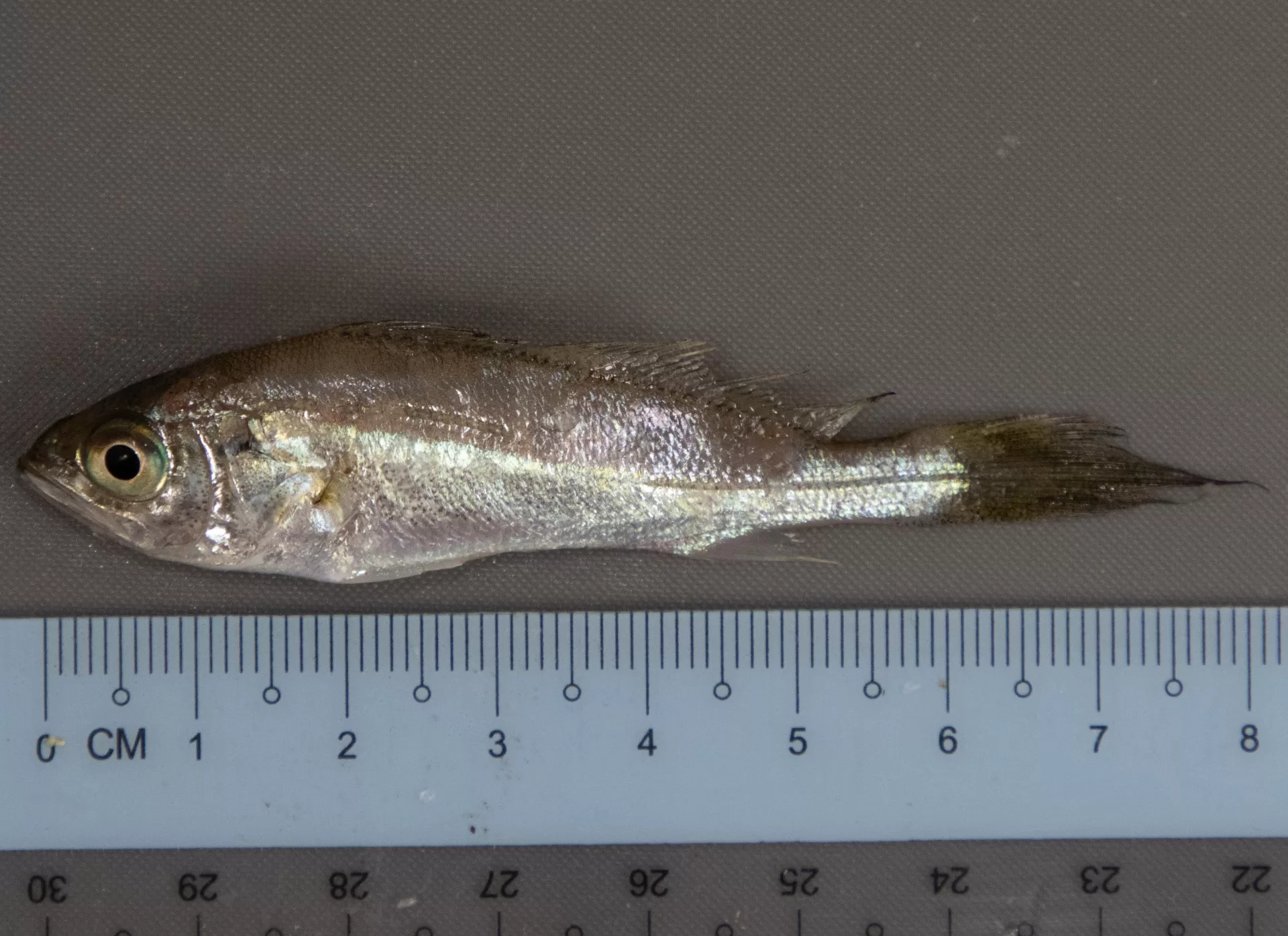
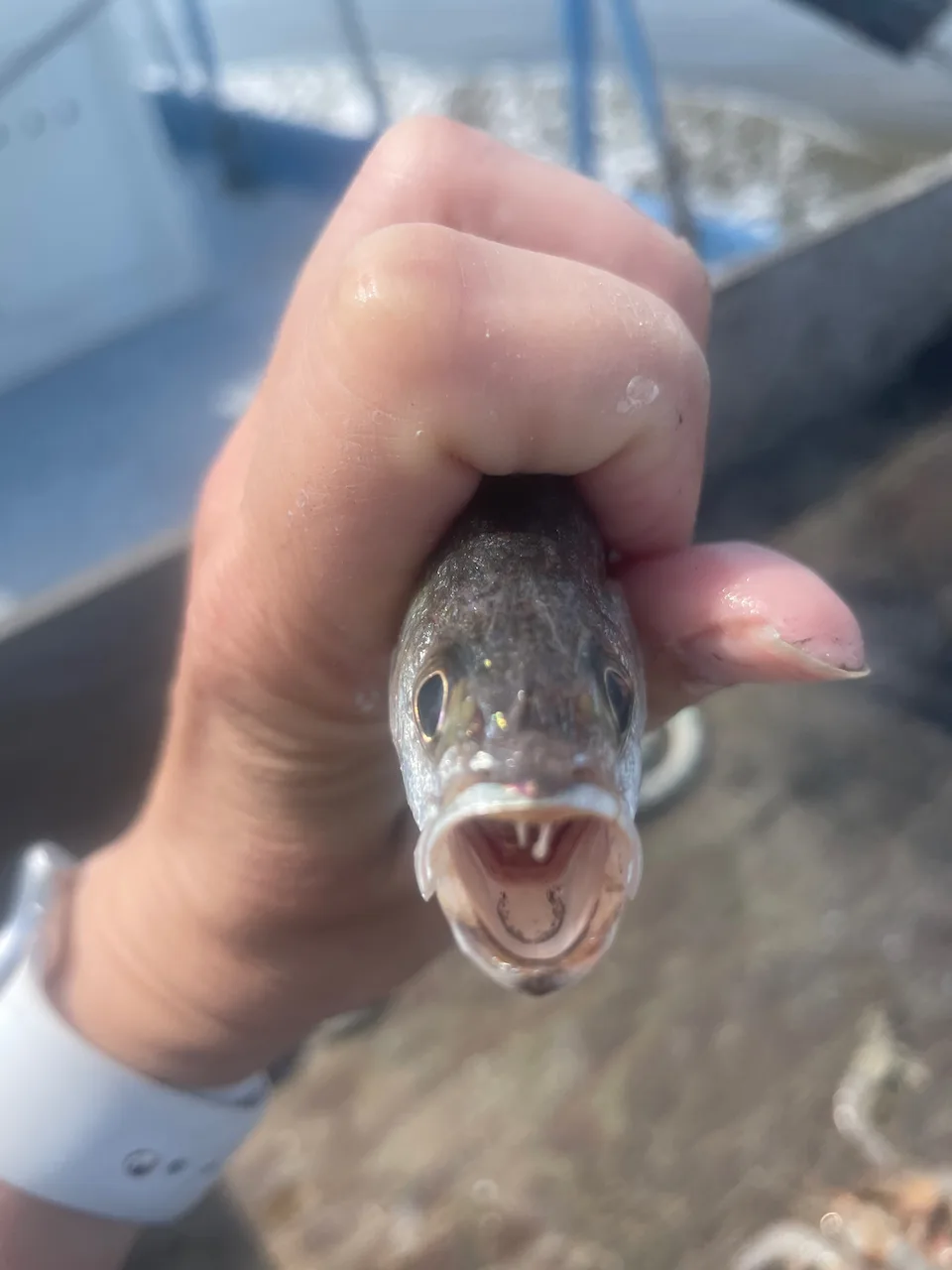
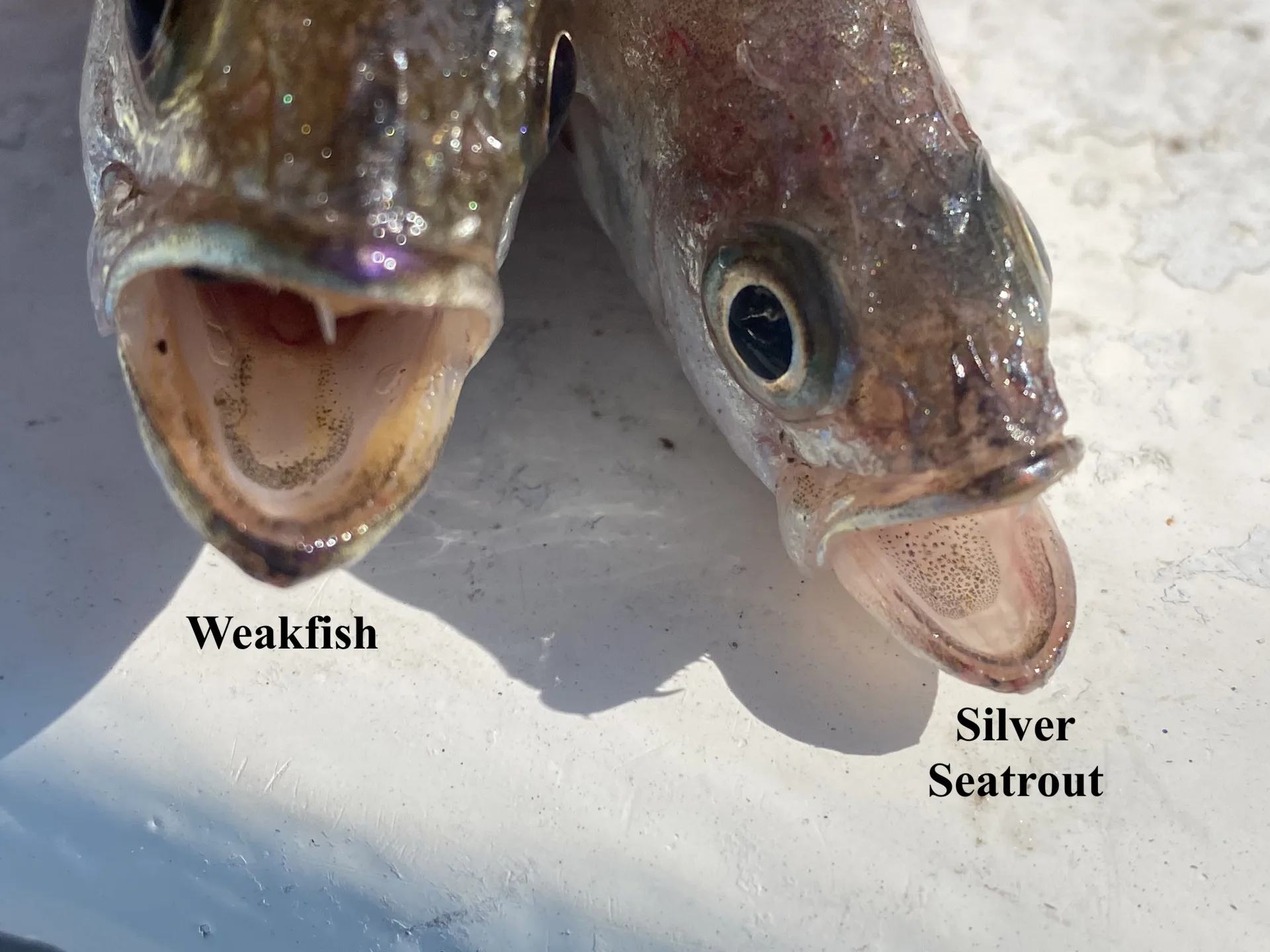
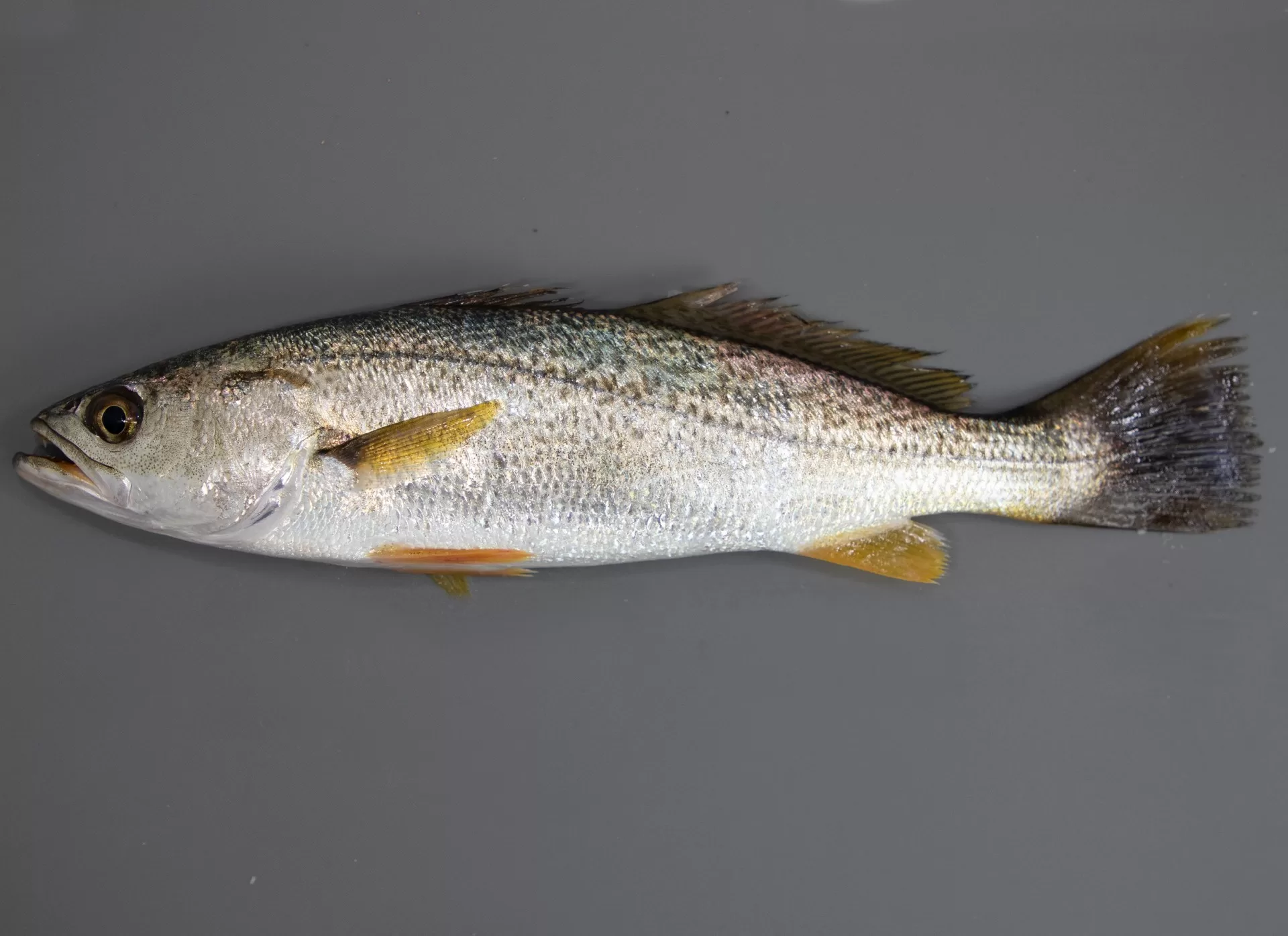
Fang-like canines near front of upper jaw. Adults have a long streamlined body that tapers towards a truncate tail. Fins exhibit a yellow tinge with a single notched dorsal fin that make look like a double detached dorsal fin. Upper half of body typically bronze/copper or silver in color and fades to white near belly. Spots may form thin brown/tan horizontal lines along upper half of body. Tongue is pigmented along the margin (edge). Juveniles have broad bands, and a pointed, lanceolate tail. Tongue is pigmented along the margin.
Average Maximum Size:
91 cm (36 in)
Adults Distinguishing Characteristics:
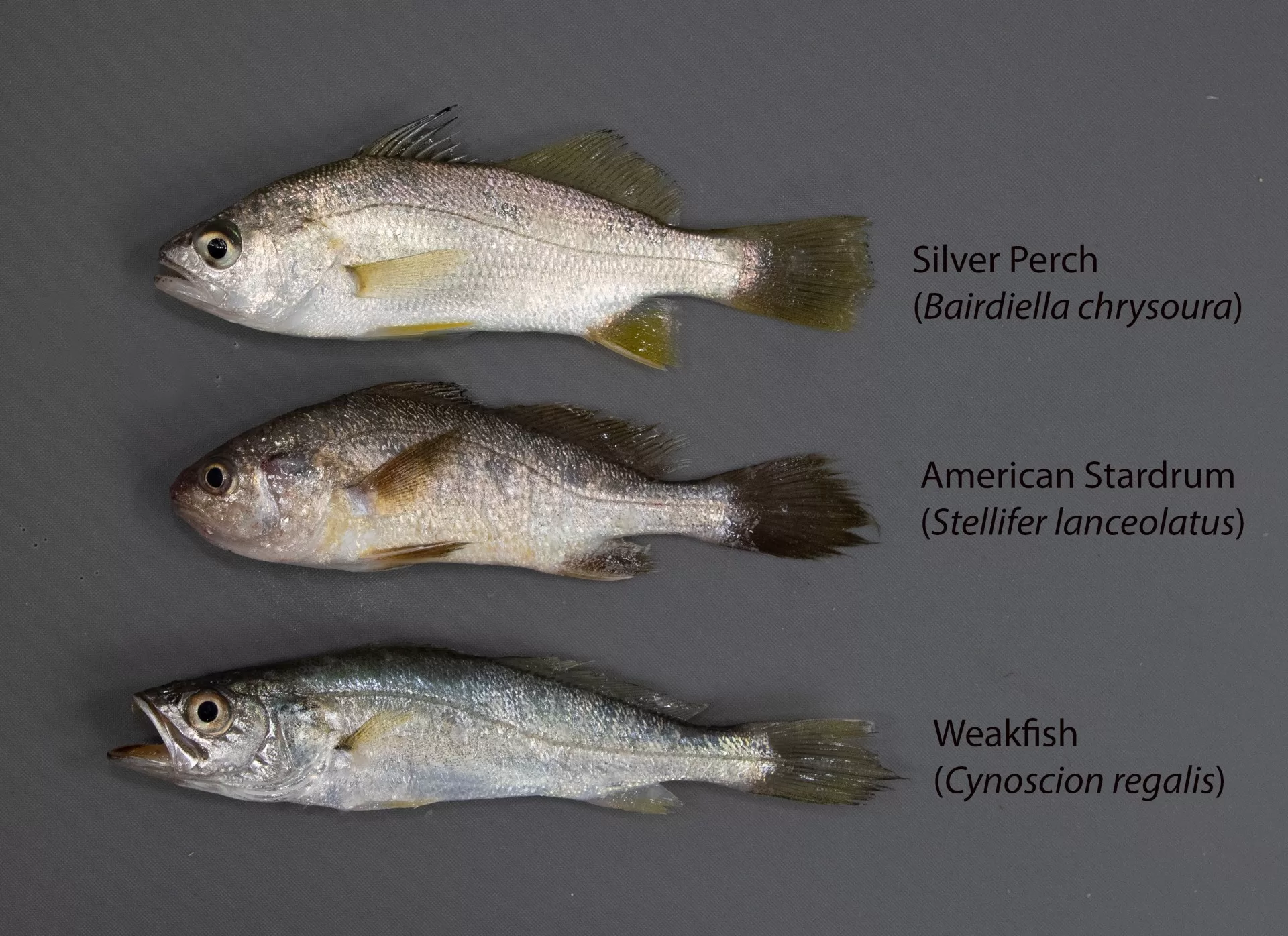
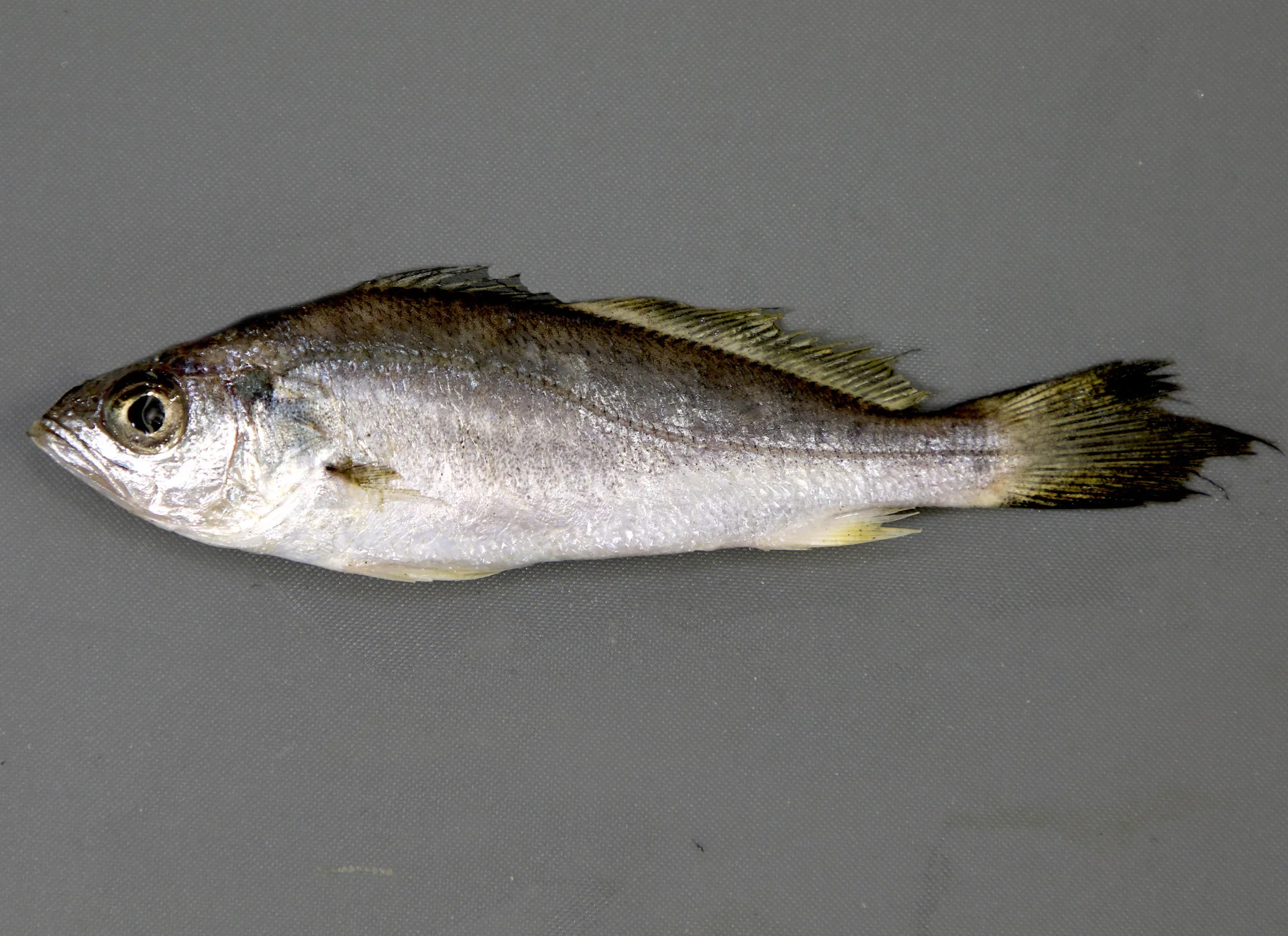
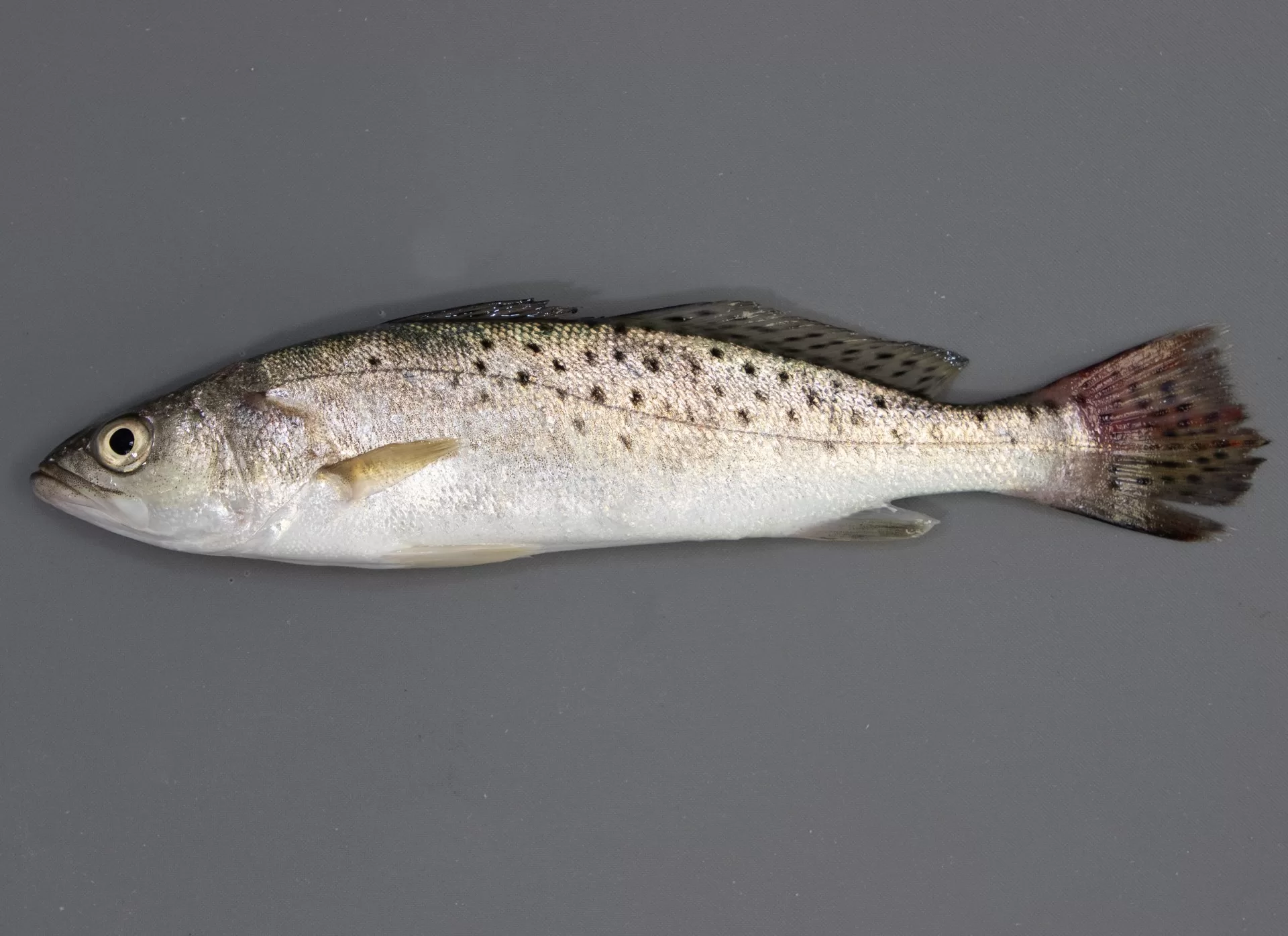
Weakfish feature mottled body stripes and pigmentation spots only along the edges of the tongue. The related Spotted Seatrout has pronounced black dots/spots along upper back, dorsal fins, and tail. The additionally related Silver Seatrout has no markings on the body and the pigment on tongue is diffuse and not restricted to margins.
Juveniles Distinguishing Characteristics:
Both Weakfish and Silver Seatrout juveniles will have broad bands and a pointed lanceolate tail. As with adult specimens, the juveniles of the two species can be differentiated by tongue pigmentation: restricted to edge (Weakfish) or dispersed around the tongue (Silver Seatrout). Spotted Seatrout juveniles will differ from the two species with their distinctive body spots.
Range:
Nova Scotia to Florida
Habitat:
Found in coastal waters with sand or sandy mud bottoms such as beaches or estuaries. They migrate into estuaries during warm months and migrate back out during cold months.