
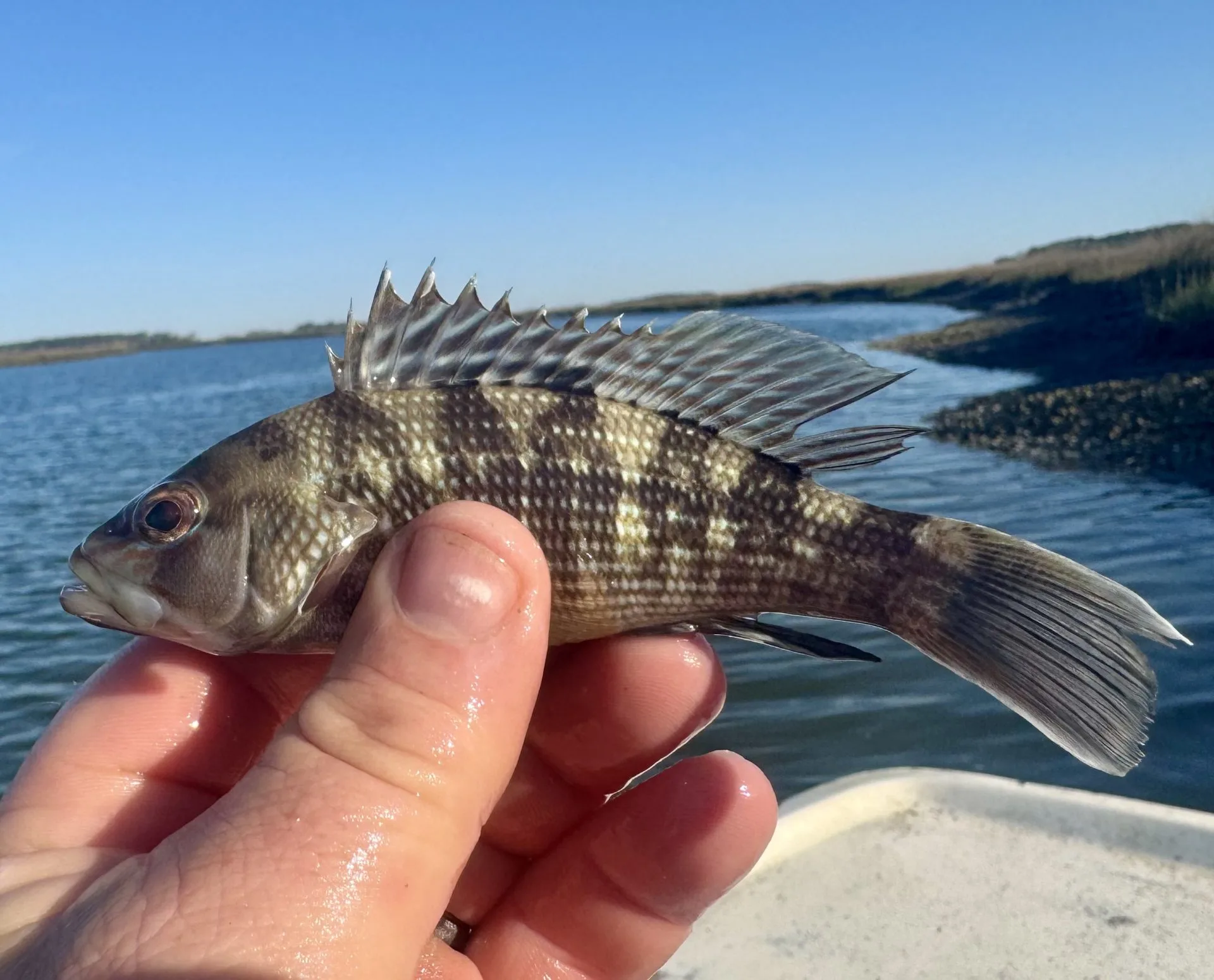
For most local fishermen, the mention of black sea bass (Centropristis striata) conjures up visions of fishing offshore on one of Georgia’s many artificial or natural reefs. However, did you know this popular member of the grouper family also has strong connections to our state’s estuaries? Adult black sea bass spawn offshore, but their larvae are transported to nearshore waters by currents and winds. As they grow these smaller individuals, which begin to take on more of their adult-like appearance, (but with more of a brownish tone), eventually migrate into our sounds and estuaries seeking shelter and protection as they grow larger.
Juveniles, like adult black sea bass are bottom dwellers and are often associated with structure. They can be found around oyster reefs, pilings, jetties, and other inshore structures within the state’s abundant marsh-bound estuaries. In fact, a 2017 study out of the University of North Carlina found that these estuary nursey habitats contributed 89% of the juvenile black sea bass to the adult stock…just one more reason why our estuaries are special places worth protecting!
Cool fact…did you know black sea bass can change their sex? They are known as protogynous hermaphrodites, which means most individuals begin life as females but will transition into males as they grow older.