
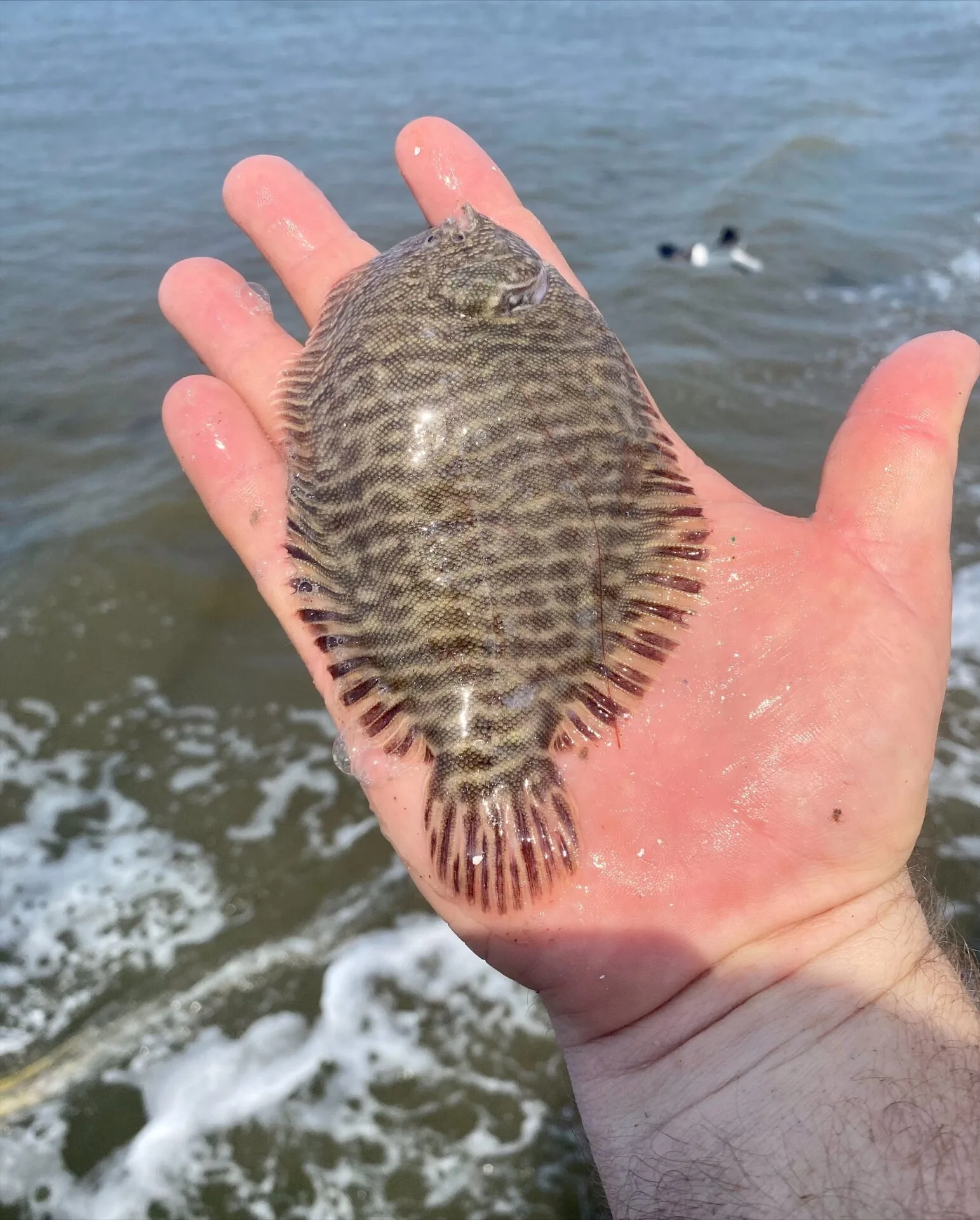
It’s a fairly safe bet that for most people the hogchoker (Trinectes maculatus) is not a common household name. Fortunately, for all us they are a common feature in Georgia’s estuaries!
These well-camouflaged flatfish with no pectoral fins are members of the Sole family (Achiridae) and have round to oval-shaped bodies. As with all fish, hogchoker larvae start out with one eye on each side of their head. As the fish develops, however their left eye will migrate until both eyes sit on the right side of the fish’s head (most of the other flatfish found on Georgia’s coast have their eyes on the left side of their head). A hogchoker’s blind side is usually white or mottled in color while its eyed side comes in various shades of brown with multiple lines and spots on its body; such coloration helps the bottom-dwelling fish masterfully blend in with their mud and sand-based surroundings. Hogchokers have small mouths but are predatory fish that feed on a variety of bottom-dwelling invertebrates. Rarely reaching six inches in length, hogchokers are thought to only live about five years.
Hogchokers are equally at home in salt and fresh water. They spawn in summer months in marine coastal waters and estuaries. After spawning, adults will migrate into low salinity waters upriver where they remain until spring; afterwards, they will migrate back to their estuarine spawning grounds. After hatching in summer, developing larvae and early juveniles migrate upstream into freshwater coastal rivers, eventually returning to the estuary as they grow.
Fun Fact: Did you know the name ‘hogchoker’ was supposedly coined by farmers who fed the fish to their swine, but got frustrated when the hogs couldn’t swallow their bony, slippery bodies?