CrabLady
Lady Crab
Leopard Crab, Calico Crab, Atlantic Leopard Crab, Ocellated Crab
Ovalipes ocellatus

Description:

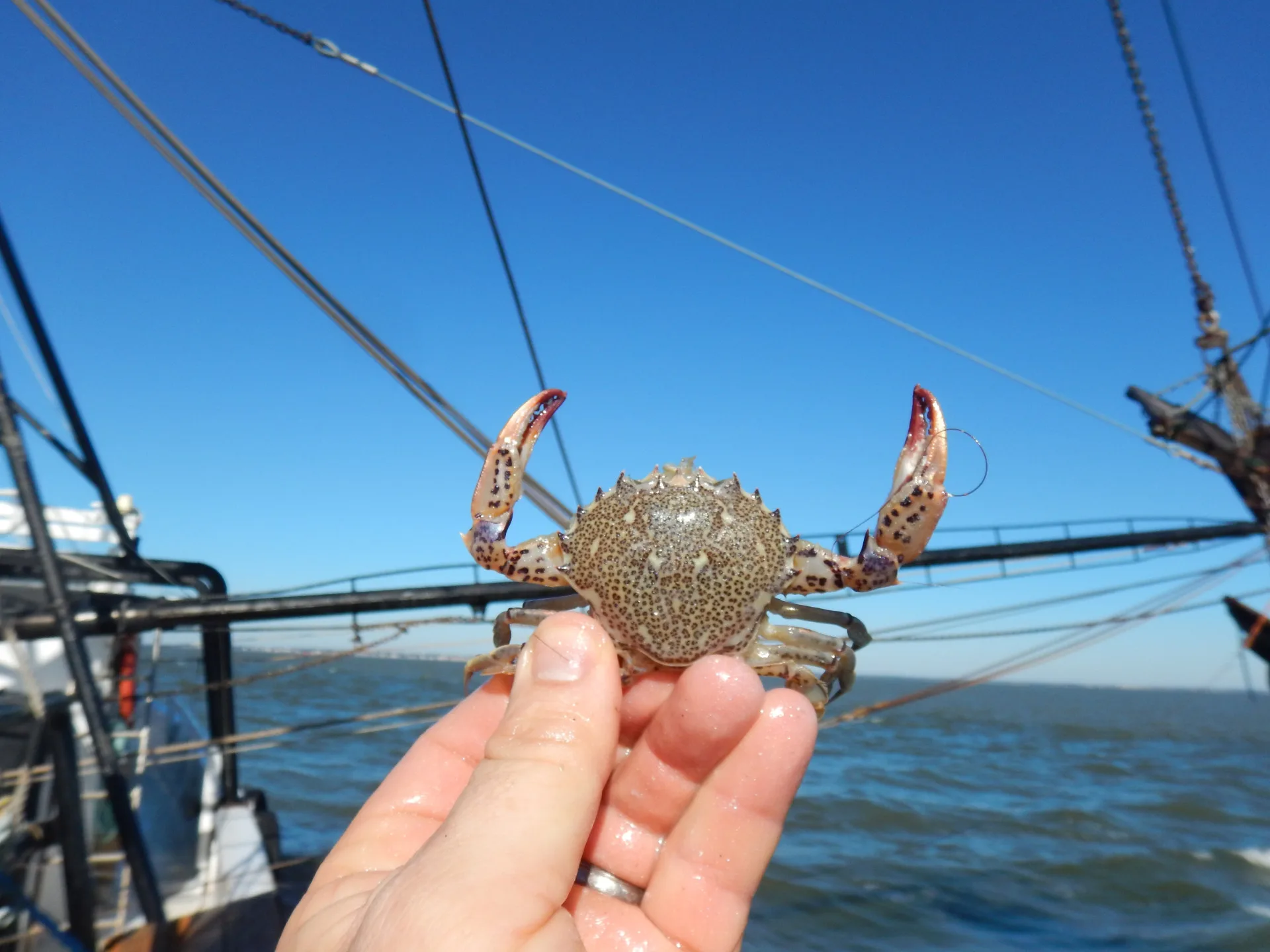
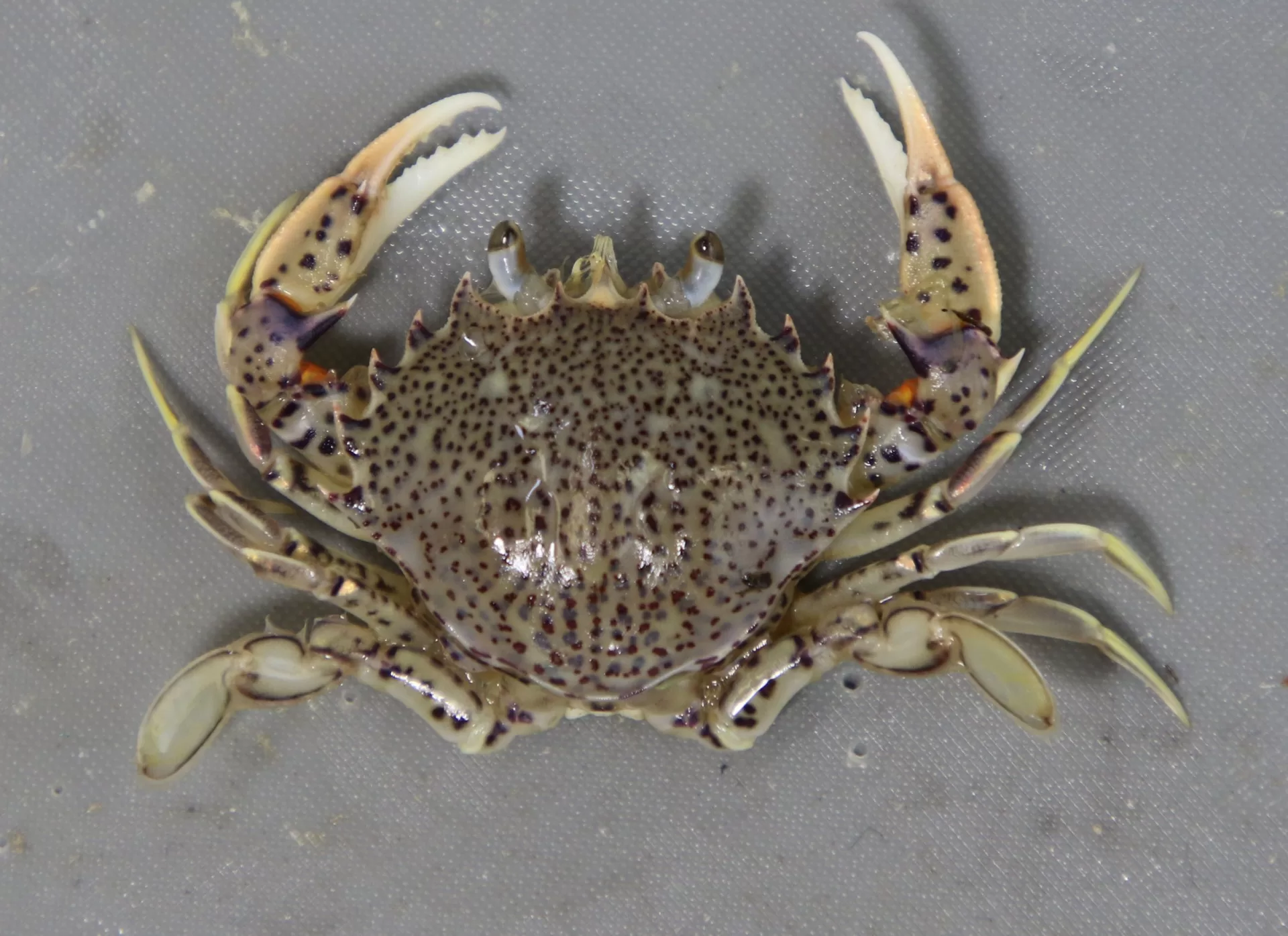
The lady crab’s carapace has a leopard spot pattern on the back. The spots are ocellated, making them look like small rings/donuts. The joints of the claws and legs are peppered with dark blotches and spots. Spots on claws appear solid and are not ocellated. Purple or maroon-colored accenting may be observed along the claws and claw joints. Legs and claws may also exhibit reddish-orange accenting. 3 - 5 carapace spines may be observed on both sides of the eyes. The lady crab may reach up to 3.5 inches in carapace length.

Average Maximum Size:

9 cm (3.5 in)

Adults Distinguishing Characteristics:

Adult Lady Crabs can be distinguished from other regional crab species suh as the Stone Crab by the presence of prominent leopard-like body patterning. Purple or maroon-colored accenting may also be observed along the claws and claw joints while the legs and claws may exhibit reddish-orange accenting.

Juveniles Distinguishing Characteristics:

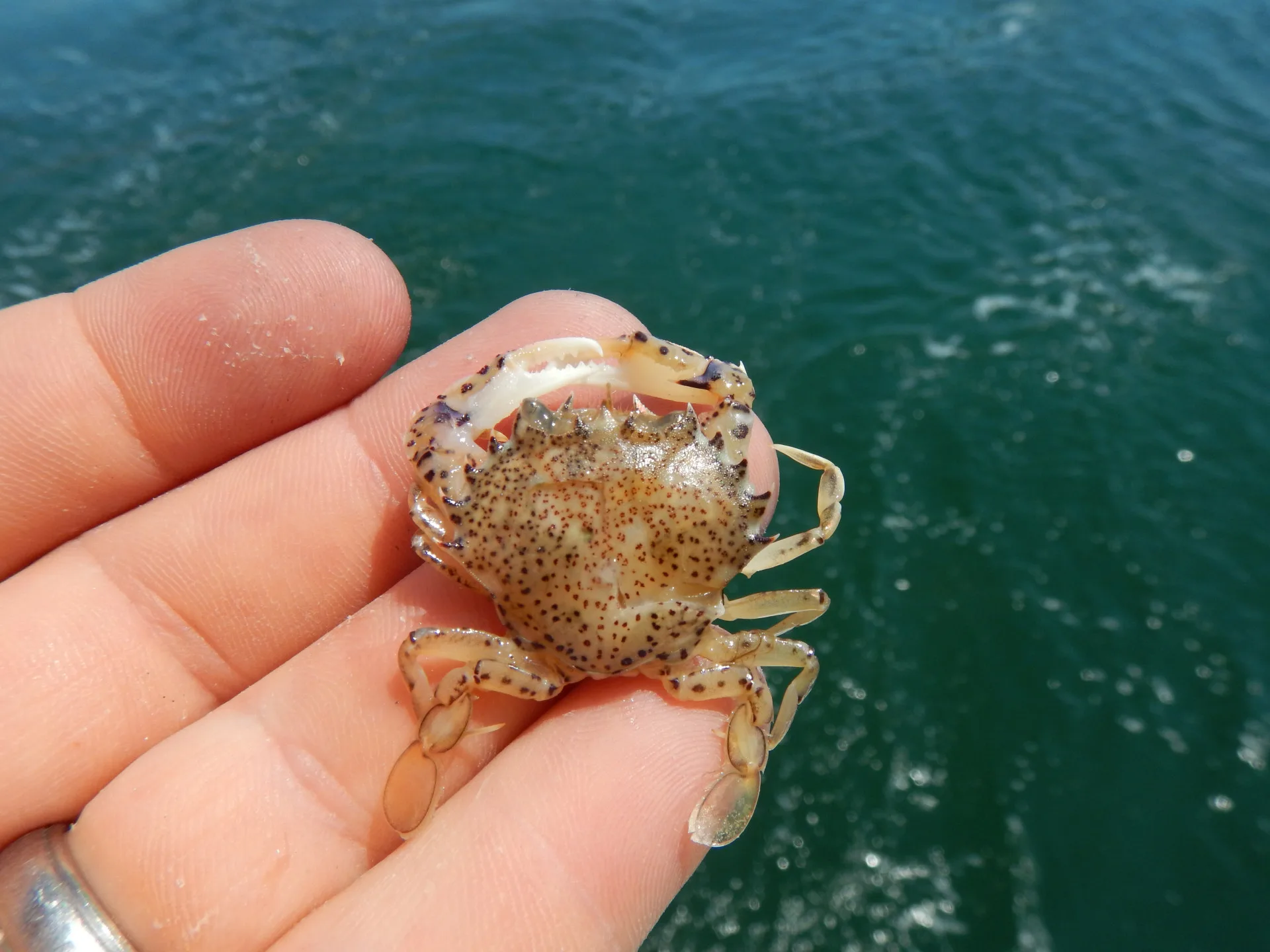
Juvenile Lady Crabs may appear an opaque-yellow with light spotting along the the legs and claws. The distinctive leopard spot pattern may still be observed on a juvenile's carapace. Purple or maroon-colored accenting may be absent along the claws and claw joints with light accenting along the legs and leg joints.

Range:

Gulf of St. Lawrence to Gulf of Mexico.

Habitat:

Lady crabs can be found in shallow subtidal waters with sandy bottoms.

Notes:

Regulated Species:

No

Regulations Website:

Species: Ovalipes ocellatus
Family: Ovalipidae
Family Description: Sand Crab
Mouth Type: NA
Tail Type: NA
Dorsal Type: NA

Similar Species

Click on the image below to view details.

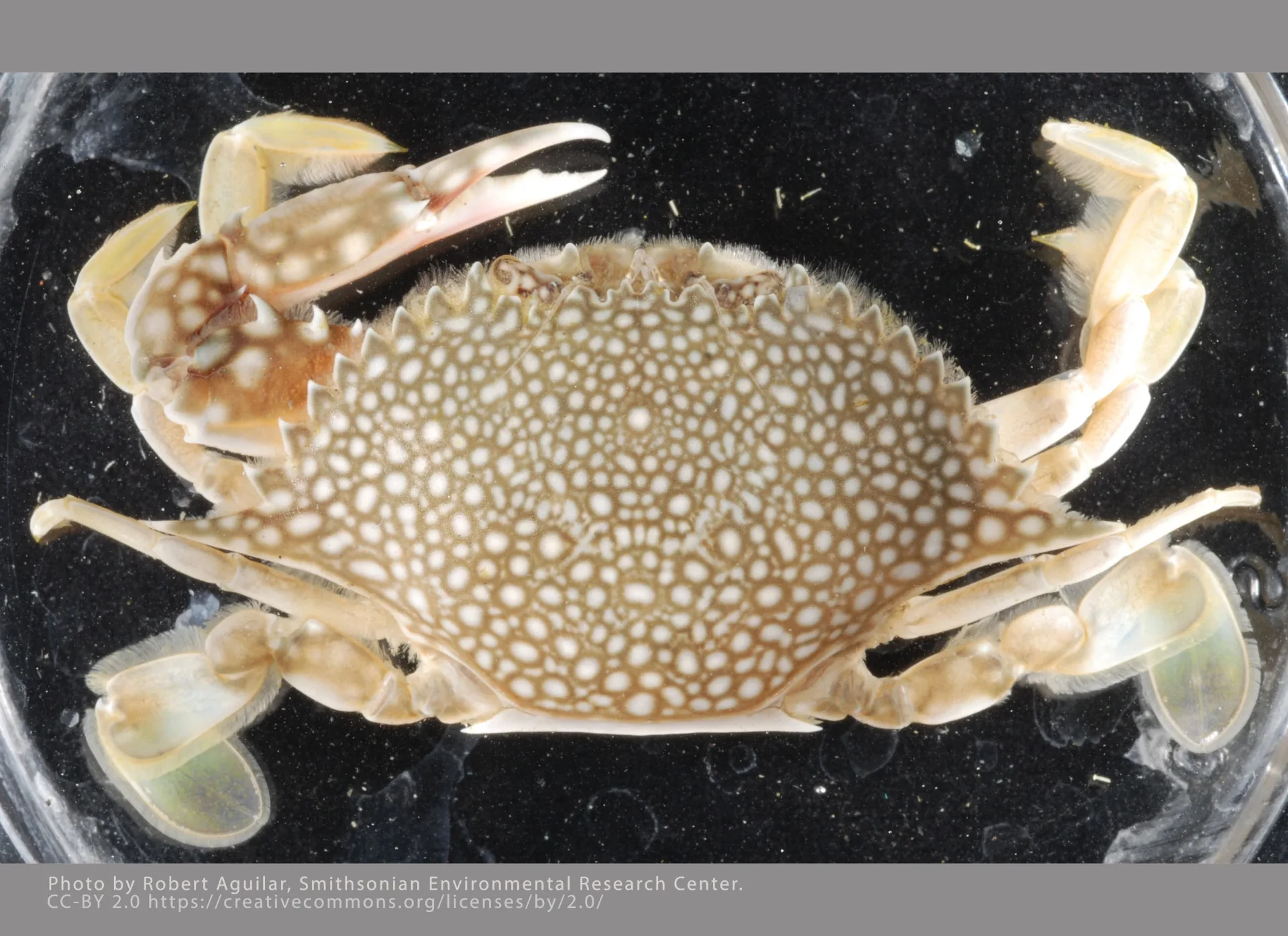
Speckled Crab
Speckled Crab