Whiting, Sea Mullet, King Whiting, Roundhead, Minkfish, Kingcroaker
Menticirrhus saxatilis
Description:
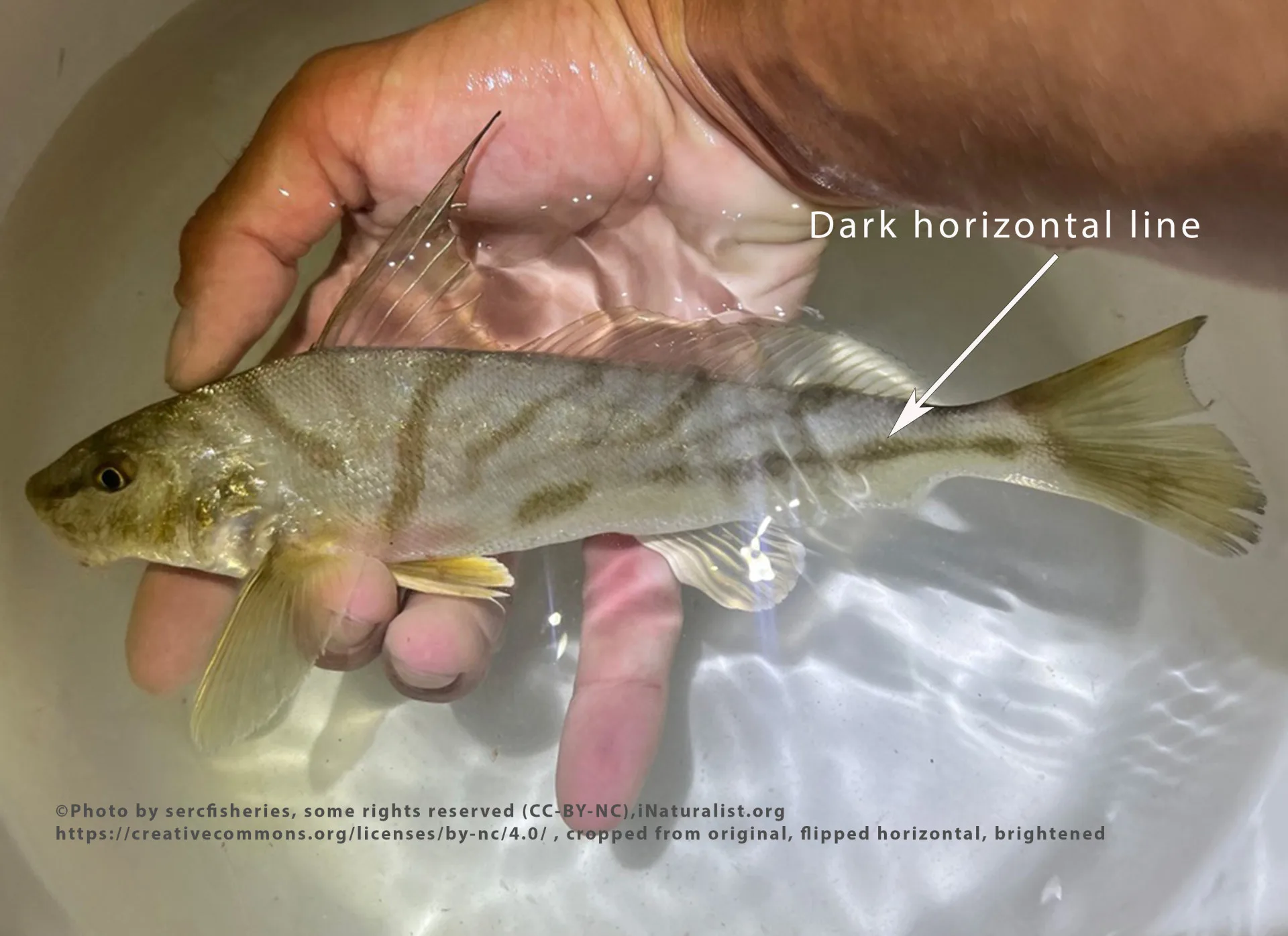
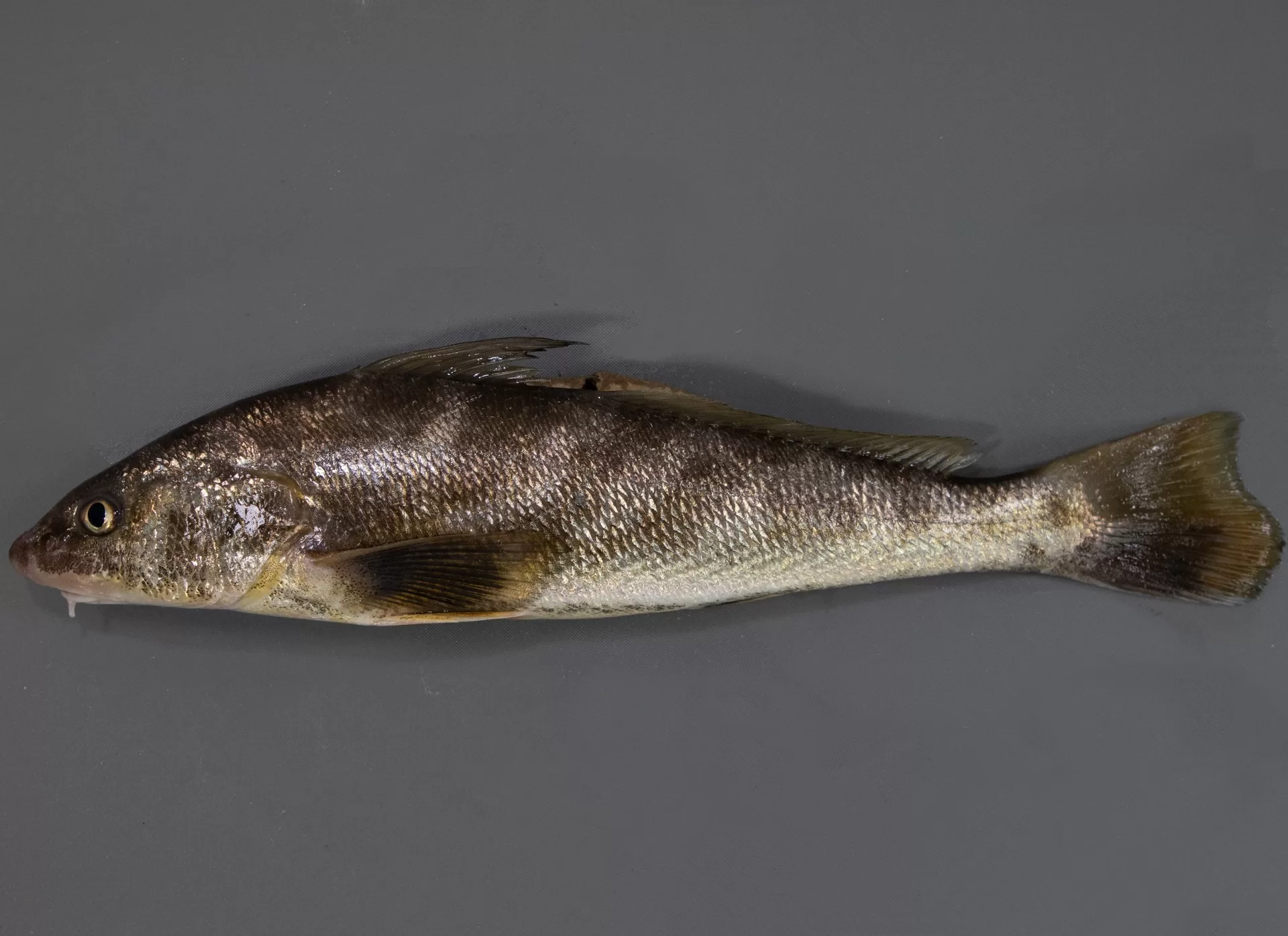
The northern kingfish has an elongated cylindrical body that tapers down to an s-shaped tail. Its body appears silver-gray or silver-brown/tan with dark oblique bars/bands on the sides. It has two distinct dorsal fins, and the oblique bars change orientation under the first dorsal fin. This results in some of the bars forming a “V”. The northern kingfish has a dark horizontal band running from above the belly region onto the lower half of the tail fin. Its mouth is oriented forward with a singular short barbel on the chin.
Average Maximum Size:
30.5 cm (12 in)
Adults Distinguishing Characteristics:
The Northern Kingfish can be distinguished from the related Southern Kingfish by its notably elongated second dorsal spine and a horizontal body stripe which extends from the base of the caudal fin to near the center of the body.
Juveniles Distinguishing Characteristics:
Markings and patterns are very dark in very small, similar to that of adults
Range:
Western Atlantic from Massachusetts to the Gulf of Mexico
Habitat:
The northern kingfish can be found in shallow coastal salt and brackish waters with soft sandy and muddy bottoms such as in estuaries and surf zones. Juveniles may be found in tidal creeks/rivers with low salinity.