Atlantic Horseshoe Crab
Limulus polyphemus

Description:

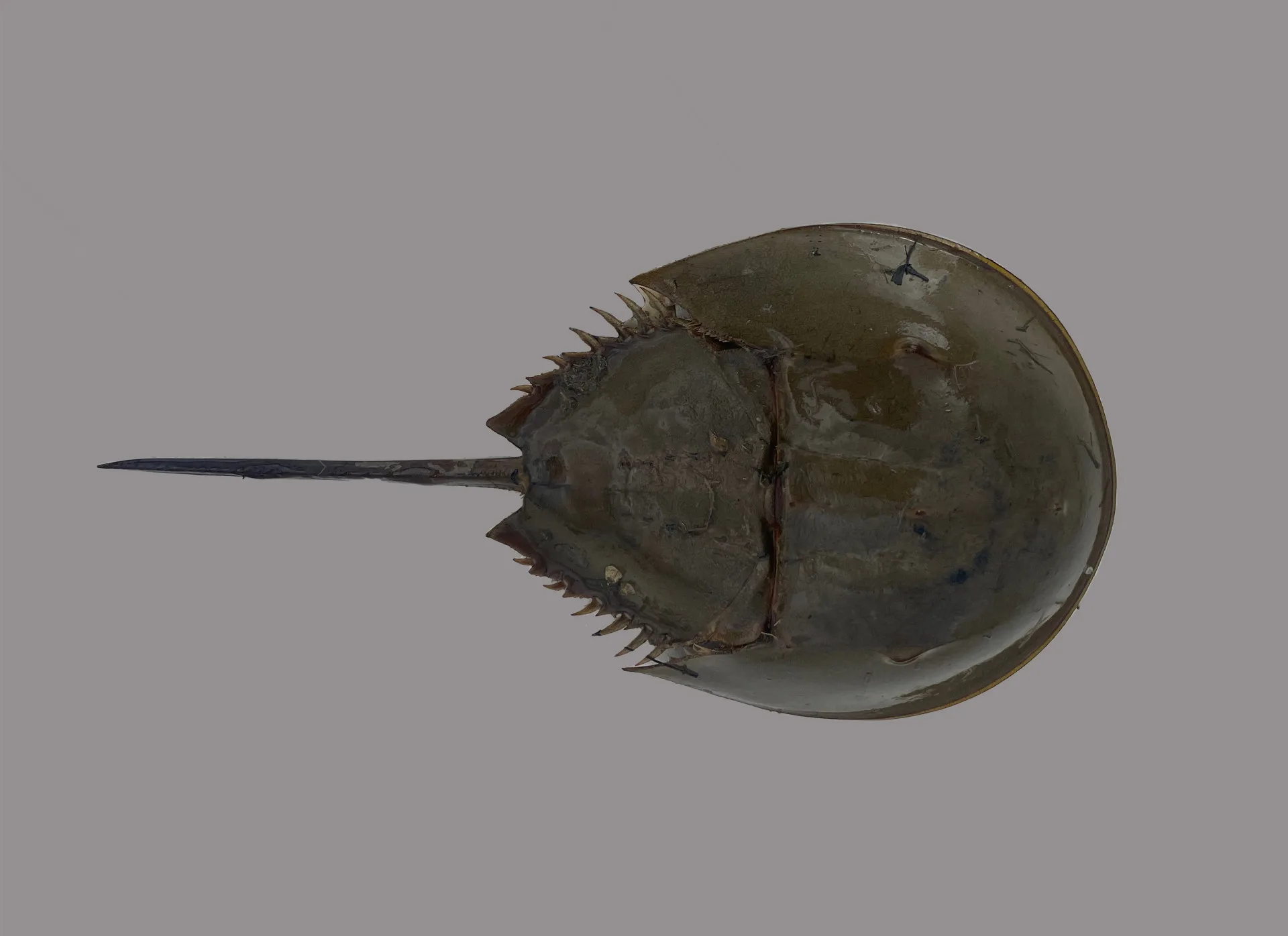
More closely related to arachnids and scorpions than crabs. Horseshoe crabs in Georgia are among the largest in the species' range. Males are smaller than females. A dark brown to gray-greenish body consists of three main parts: the head (prosoma) region shaped like a helmet or horseshoe, the hinged abdominal region (opisthosoma) with spines on its posterior, and the spine-like tail (telson), that is stingless. They have six pairs of legs. The first pair in the front of have small pincers on it to grasp its food. The next four pairs are used for walking. The second pair of legs in males also have claspers on them to hold onto the female for reproductive purposes.

Average Maximum Size:

60 cm (24 in)

Adults Distinguishing Characteristics:

Juveniles Distinguishing Characteristics:

Range:

Maine to Gulf Coast

Habitat:

Shallow coastal habitats, in estuaries and mangroves, along beaches from depths to 0 to 200 meters

Notes:

Harmless to handle. It has been overharvested for bait and medical uses. Its blue blood is highly valued for its ability to detect impurities. This has many uses in the medical field.

Regulated Species:

Yes
Species: Limulus polyphemus
Family: Limulidae
Family Description: Horseshoe Crab
Mouth Type: NA
Tail Type: NA
Dorsal Type: NA

Similar Species

Click on the image below to view details.